Making good coffee at home is not only about choosing quality beans. The brewing method, grind size, water, temperature, and brewing time can all change the final cup.
What Is Coffee Brewing?
Coffee brewing is the process of extracting flavor from ground coffee using water. The way coffee is brewed affects its strength, aroma, acidity, body, and overall taste.
Several factors work together during brewing:
- Grind size affects how quickly water extracts the coffee.
- Water temperature influences extraction and flavor.
- Coffee-to-water ratio affects strength.
- Brewing time changes how much flavor is extracted.
- Brewing method determines the overall character of the coffee.
Understanding these basic factors makes it easier to adjust a coffee recipe and get more consistent results.
Coffee Brewing Methods
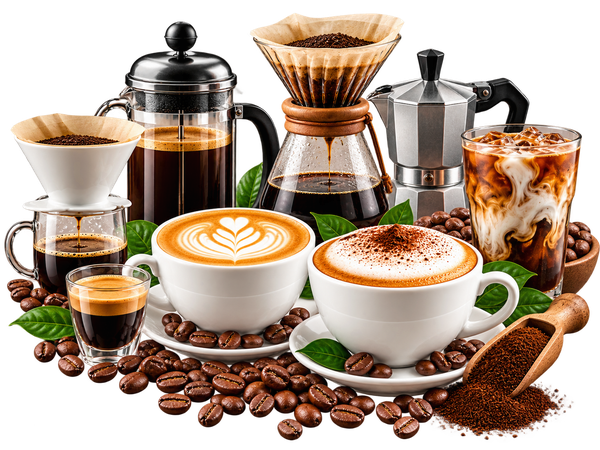
Each method uses a different combination of grind size, water, time, and equipment, which gives the finished coffee its own flavor, body, and aroma.
| Brewing Method | General Character | Best For |
|---|---|---|
| Espresso | Concentrated and rich | Lattes, cappuccinos, americanos |
| Drip Coffee | Balanced and convenient | Everyday coffee |
| French Press | Full-bodied and rich | Stronger-tasting coffee |
| Pour Over | Clean and detailed | Flavor-focused brewing |
| Cold Brew | Smooth and chilled | Cold coffee drinks |
| Moka Pot | Strong and concentrated | Stovetop coffee |
The best method depends on the flavor, strength, and brewing experience you prefer.
Espresso
Espresso uses finely ground coffee and pressure to produce a small, concentrated shot. It is also the foundation for many popular drinks, including latte, cappuccino, flat white, mocha, and Americano.
Drip Coffee
Drip coffee makers automatically pass hot water through ground coffee and a filter. This method is convenient and works well when you want to prepare several cups at once.
French Press
French press uses immersion brewing. Coarsely ground coffee steeps in hot water before the grounds are separated with a plunger. It typically produces a rich body and more noticeable mouthfeel.
Pour Over
Pour-over brewing gives you more control over water flow, timing, and extraction. It can highlight subtle flavors and is popular with people who enjoy a more hands-on brewing process.
Cold Brew
Cold brew uses cool or room-temperature water and a long extraction period. The resulting coffee is commonly served over ice and can be diluted with water or milk.
Moka Pot
A moka pot brews coffee on the stovetop by pushing heated water through ground coffee. It produces a concentrated drink that works well on its own or with milk.
How to Choose the Right Coffee Brewing Method
Your preferred brewing method can depend on how you like your coffee and how much time you want to spend preparing it.
| If You Prefer… | Consider… |
|---|---|
| Concentrated coffee | Espresso |
| Convenient everyday brewing | Drip coffee |
| Rich, full-bodied coffee | French press |
| More control over extraction | Pour over |
| Cold and smooth coffee | Cold brew |
| Strong stovetop coffee | Moka pot |
You can also choose based on the equipment you already have. A drip machine is convenient for daily brewing, while pour over and French press require more direct involvement.
Coffee Recipes to Try at Home
Different brewing methods can be used as the starting point for a wide range of coffee drinks. Espresso-based recipes are especially versatile because a single shot can be combined with milk, water, foam, or other ingredients.
Popular Espresso-Based Drinks
Espresso is the base for many classic coffee drinks, but each recipe creates a different balance of coffee, milk, water, and flavor.
- Latte — espresso with steamed milk and a thin layer of foam.
- Cappuccino — espresso with steamed milk and a thicker layer of foam.
- Flat White — espresso combined with finely textured steamed milk.
- Americano — espresso diluted with hot water.
- Mocha — espresso combined with chocolate and milk.
- Macchiato — espresso with a small amount of milk or milk foam.
For detailed preparation, explore our individual coffee recipes and drink guides.
Cold Coffee Recipes
Cold coffee offers another way to enjoy brewed coffee, especially during warmer weather.
Popular options include:
- Cold Brew
- Iced Coffee
- Iced Latte
- Iced Americano
- Iced Mocha
- Cold Brew with Milk
The brewing method and serving style can make a significant difference. Cold brew, for example, is extracted slowly before serving, while iced coffee is typically brewed hot and then cooled.
Coffee Brewing Ratios & Grind Sizes
There is no single recipe that works perfectly for every bean and brewing method, but the following table provides a useful starting point.
| Method | Typical Grind | General Brew Time |
|---|---|---|
| Espresso | Fine | About 25–30 seconds |
| Pour Over | Medium-fine | About 2.5–4 minutes |
| Drip Coffee | Medium | About 4–6 minutes |
| French Press | Coarse | About 4 minutes |
| Cold Brew | Coarse | About 12–24 hours |
| Moka Pot | Fine to medium-fine | Several minutes |
These are starting points rather than strict rules. Coffee origin, roast level, equipment, dose, and personal taste can all affect the ideal settings.
Latte & Cappuccino Recipes
Milk-based espresso drinks deserve their own section because they combine coffee brewing with milk preparation.
Popular guides include:
- How to Make a Latte
- How to Make a Cappuccino
- How to Make an Iced Latte
- How to Make a Flat White
- How to Make a Mocha
The texture of steamed milk is particularly important. A latte generally uses smoother, thinner foam, while a cappuccino traditionally has a more substantial foam layer.