
To make a homemade macchiato, brew a double espresso (36–40 g) and top it with 5–10 ml (1–2 tsp) of milk foam. The result is a small, bold coffee drink with a touch of creaminess. You only need espresso, milk, and about five minutes.
What Is a Macchiato Coffee? The Classic Italian Drink
A traditional espresso macchiato is a concentrated coffee topped with a small spoonful of steamed milk or foam. The Italian word macchiato means “stained” or “marked,” describing the white spot of milk on the dark espresso.
Unlike a latte, the drink is mostly coffee. Its defining characteristics include:
- Espresso Base: One or two concentrated espresso shots.
- Milk Foam: A small spoonful that softens the coffee’s intensity.
- Flavor: Bold, aromatic espresso with a creamy finish.
- Serving Size: Usually served in a small espresso cup.
A classic macchiato contains no flavored syrup by default. Caramel macchiatos and latte macchiatos are different drinks with much larger amounts of milk.
Macchiato Ingredients & Equipment
Making an espresso macchiato at home requires just two ingredients. Fresh coffee and properly textured milk are more important than elaborate toppings or sweeteners.
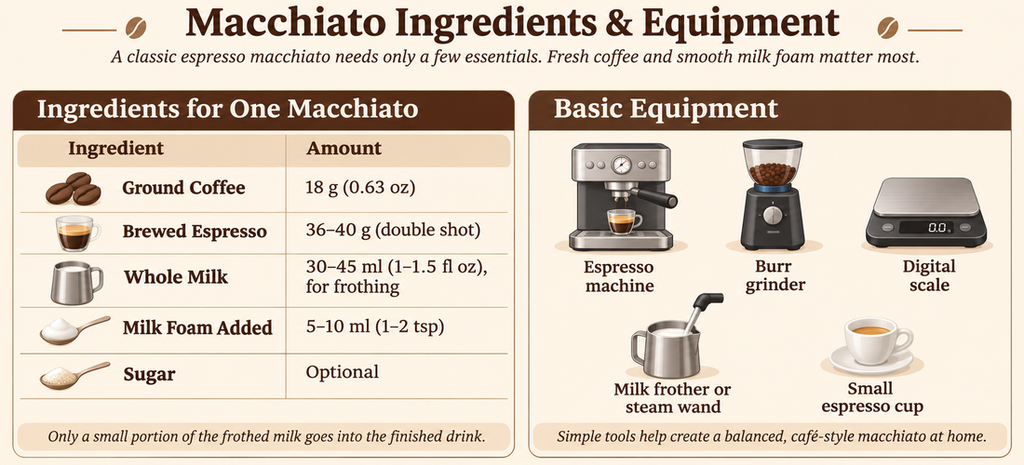
Ingredients for One Macchiato
| Ingredient | Amount |
|---|---|
| Ground Coffee | 18 g (0.63 oz) |
| Brewed Espresso | 36–40 g (double shot) |
| Whole Milk | 30–45 ml (1–1.5 fl oz), for frothing |
| Milk Foam Added | 5–10 ml (1–2 tsp) |
| Sugar | Optional |
Only a small portion of the milk you froth goes into the finished drink. The remaining milk helps provide enough volume to froth, although very small quantities may be difficult to steam with a full-size wand.
Equipment You’ll Need
A basic espresso setup provides the most control over coffee strength and milk texture.
- Espresso machine with a double-shot basket
- Burr grinder for fresh beans
- Digital coffee scale
- Steam wand or handheld milk frother
- Small espresso cup and teaspoon
Medium and medium-dark roasts are useful starting points because their chocolate, nutty, and caramel-like notes complement milk.
For more extraction advice, read our How to Make Espresso at Home guide.
Best Espresso Macchiato Ratio: Coffee to Milk
The ideal macchiato is espresso-forward, with just enough milk foam to soften the edges. Unlike a latte, it shouldn’t taste primarily of warm milk.
For a double-shot version, start with 36 g of brewed espresso and 5–10 ml of foam.
Espresso Macchiato Ratio Chart
| Macchiato Style | Espresso | Milk Foam |
|---|---|---|
| Classic Single | 18–20 g | 5 ml (1 tsp) |
| Double Macchiato | 36–40 g | 5–10 ml (1–2 tsp) |
| Softer Macchiato | 36–40 g | 15 ml (1 tbsp) |
These are practical home serving proportions, not fixed café standards. Foam volume is approximate because its density changes with aeration.
The double macchiato provides more coffee intensity, while the softer version adds slightly more creaminess. Keep the foam minimal if you want a traditional espresso-focused experience.
How to Make a Macchiato at Home (Step-by-Step)
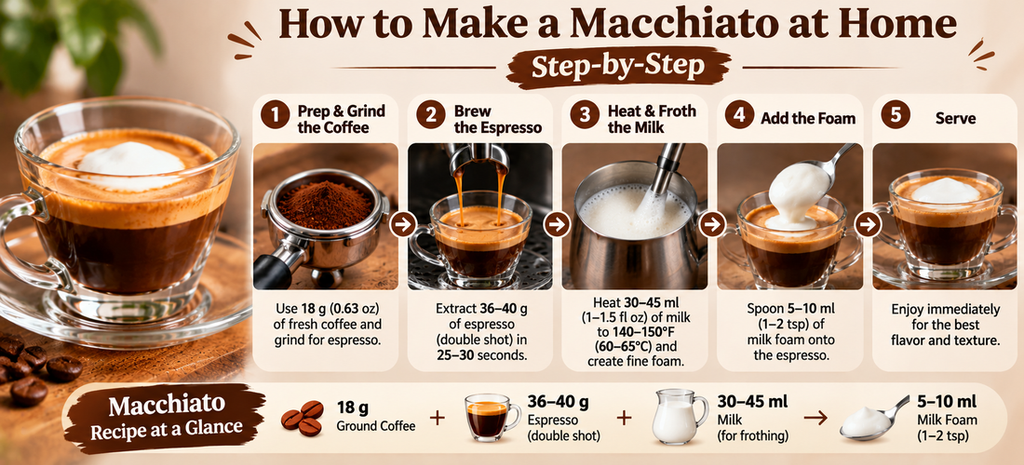
A homemade macchiato takes approximately 5 minutes once your espresso machine is ready. The key is preparing a balanced shot before adding a small amount of smooth milk foam.
Step 1: Prepare Your Espresso Machine
Preheat the machine and warm a small espresso cup. Use clean water and fresh coffee beans for a better flavor.
Step 2: Grind and Measure the Coffee
Weigh 18 g of coffee beans and grind finely for espresso. Distribute the grounds evenly in the portafilter and tamp to create a level coffee bed.
Step 3: Brew a Double Espresso
Extract 36–40 g of espresso in approximately 25–30 seconds as a starting point.
The Specialty Coffee Association identifies a 1:2 coffee-to-espresso extraction ratio as a common professional starting point.
Step 4: Heat and Froth the Milk
Heat 30–45 ml of milk to approximately 140–150°F (60–65°C), using a suitable small frothing vessel.
Create smooth foam with tiny bubbles rather than stiff, dry froth. If using a large steam wand, prepare more milk as needed to reach the wand’s minimum fill level.
Step 5: Add the Foam and Serve
Spoon 5–10 ml of milk foam onto the center of your freshly brewed espresso.
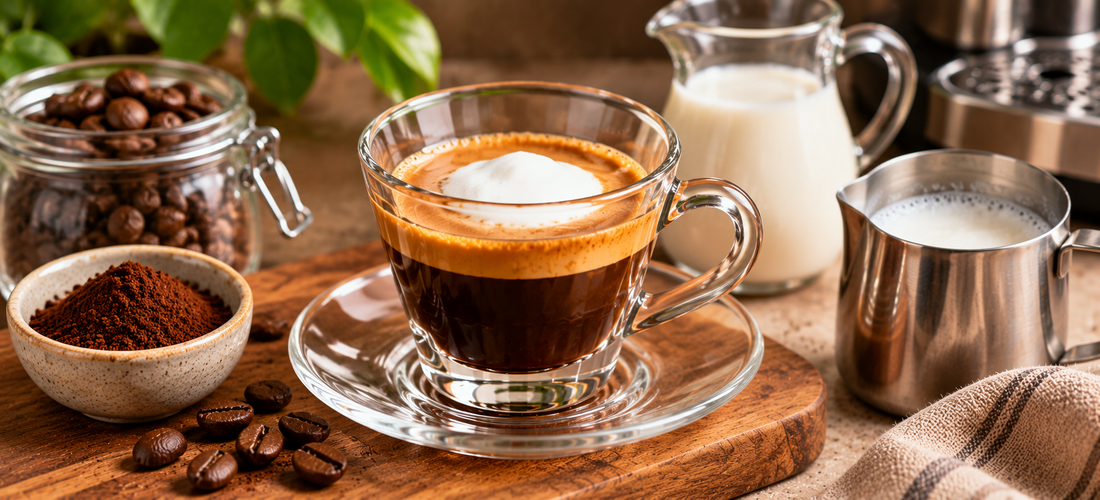
The foam should create a small white mark while leaving most of the espresso visible. Serve immediately in a small cup.
Quick Recipe: 18 g ground coffee → 36–40 g espresso → 5–10 ml milk foam.
For a traditional single-shot macchiato, use approximately half the espresso dose and yield with a suitable single basket, then add one teaspoon of foam.
Espresso Macchiato vs. Latte Macchiato vs. Cappuccino
These three drinks contain espresso and milk, but their proportions are very different. An espresso macchiato highlights the coffee, while a latte macchiato is much milkier.
| Feature | Espresso Macchiato | Latte Macchiato | Cappuccino |
|---|---|---|---|
| Espresso | Single or double | Usually single or double | Single or double |
| Steamed Milk | Very little | Large amount | Moderate amount |
| Milk Foam | Small spoonful | Noticeable top layer | Thick, airy layer |
| Serving | Small cup | Tall glass | Medium cup |
| Flavor | Strong coffee | Mild, creamy | Balanced coffee & milk |
The biggest difference is the amount of milk relative to espresso. A macchiato preserves the coffee’s concentrated flavor, while a cappuccino creates a more balanced combination of espresso, milk, and foam.
For a milkier alternative, see our Homemade Latte Recipe.
How to Make a Macchiato Without an Espresso Machine
You can prepare a macchiato-style drink without a traditional espresso machine by using concentrated moka pot coffee. The result won’t have exactly the same pressure-extracted flavor or crema, but it can still produce a rich cup.
Easy Moka Pot Method
This alternative works best when the coffee is freshly prepared and the milk foam is added immediately.
- Brew Coffee: Prepare approximately 40 ml of concentrated moka pot coffee.
- Heat Milk: Warm 30–45 ml of milk to around 140–150°F (60–65°C).
- Froth: Use a handheld frother to create fine bubbles.
- Finish: Spoon 5–10 ml of foam over the coffee.
Avoid filling the cup with milk, or the drink will resemble a small latte rather than an espresso macchiato.
A moka pot version offers convenience when you don’t own an espresso machine, but true espresso remains the closest match to the traditional Italian drink.
Common Macchiato Mistakes & How to Avoid Them
A macchiato has very few ingredients, so small preparation mistakes can noticeably affect its taste. Most problems come from espresso extraction or adding too much milk.
The most common mistakes are:
- Using Too Much Milk: Excess milk hides the espresso flavor. Start with just 5–10 ml of foam.
- Making Large Foam Bubbles: Dry, airy foam creates a rough texture. Aim for fine, creamy microfoam.
- Poor Espresso Extraction: Sour or bitter shots remain noticeable beneath the foam. Adjust the grind and extraction before adding milk.
- Overheating the Milk: Excessive heat can create a cooked flavor. Keep milk around 140–150°F (60–65°C).
For consistent results, measure your coffee dose and espresso yield, then add the milk foam gradually. A good macchiato should taste primarily of espresso, with just enough creaminess to round out its flavor.
Homemade Espresso Macchiato Recipe
Make a classic espresso macchiato at home with a bold double espresso and a small spoonful of creamy milk foam.
Ingredients
- 18 g (0.63 oz) finely ground coffee, to brew 36–40 g of double espresso
- 30–45 ml (1–1.5 fl oz) whole milk, for frothing (add only 5–10 ml of foam)
- Sugar, optional
Instructions
- Prepare the Espresso Machine. Preheat the espresso machine and warm a small espresso cup.
- Grind and Measure. Weigh 18 g of coffee beans, grind finely for espresso, distribute the grounds evenly, and tamp level.
- Brew a Double Espresso. Extract 36–40 g of espresso in approximately 25–30 seconds as a starting point.
- Heat and Froth the Milk. Heat 30–45 ml of whole milk to 140–150°F (60–65°C) and create fine, smooth foam. Use more milk if your steam wand requires a higher minimum fill level.
- Add Foam and Serve. Spoon 5–10 ml (1–2 tsp) of milk foam onto the center of the espresso. Serve immediately.