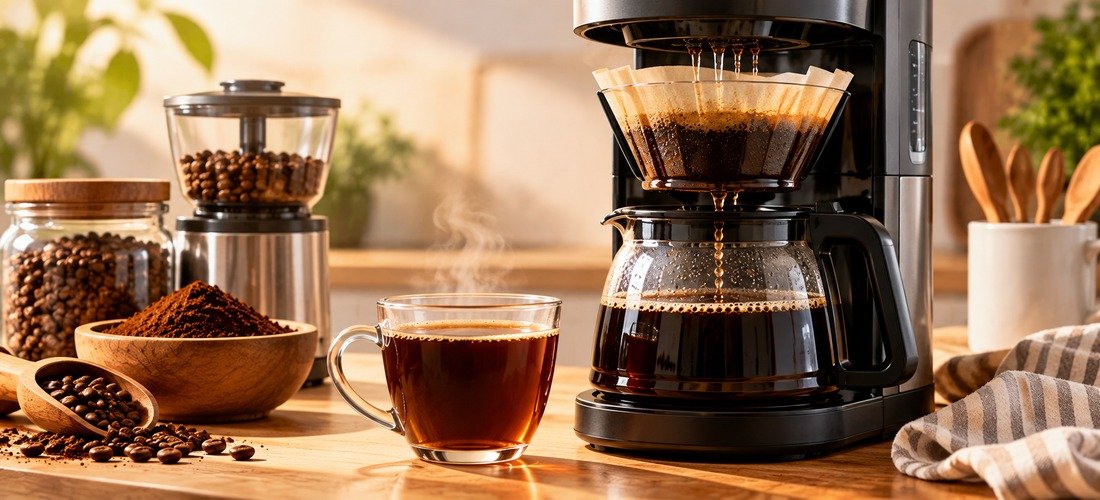
Drip coffee is one of the easiest ways to enjoy a consistent cup at home. However, the flavor depends on more than the coffee maker itself. The right beans, grind size, water temperature, and coffee-to-water ratio all influence the final result.
What Is Drip Coffee?
Drip coffee is made by pouring hot water over ground coffee and allowing it to pass through a filter. The filter keeps most of the grounds out of the finished drink, which collects in a carafe or cup.
A well-brewed cup of drip coffee typically offers:
- Balanced flavor: A combination of sweetness, acidity, and bitterness.
- Clean finish: A smooth texture with fewer coffee particles.
- Distinct aromas: Flavor notes that vary depending on the beans and roast.
- Easy preparation: Automatic coffee makers handle most of the brewing process.
Drip coffee is a practical choice for everyday brewing, especially when you want to prepare several cups at once without complicated equipment.
What You Need to Make Drip Coffee
You do not need professional equipment to make good drip coffee. A few basic items are enough to get started.
| Equipment | Purpose |
|---|---|
| Drip coffee maker | Heats water and controls the brewing cycle |
| Coffee beans or ground coffee | Provides the flavor and aroma |
| Burr grinder | Produces a consistent grind |
| Coffee filter | Holds the grounds during brewing |
| Digital scale | Measures coffee and water accurately |
| Filtered water | Helps avoid unwanted flavors |
A grinder and digital scale are especially useful if you want to repeat a recipe and adjust it consistently.
What Coffee Is Best for Drip Coffee?
The best coffee for drip brewing depends on the flavor you enjoy. Medium-roast beans are a reliable starting point because they often deliver a balanced cup with pleasant sweetness, moderate acidity, and enough body for everyday drinking.
Different roasts offer distinct flavor profiles:
- Light roast: Brighter acidity with floral, fruity, or citrus notes.
- Medium roast: A balanced combination of sweetness, aroma, and body.
- Dark roast: Deeper flavors of dark chocolate, toasted nuts, and caramelized sugar.
If you prefer familiar espresso-style blends, you can also try Lavazza Super Crema or illy Classico whole-bean coffee.
Choosing the Right Grind Size for Drip Coffee
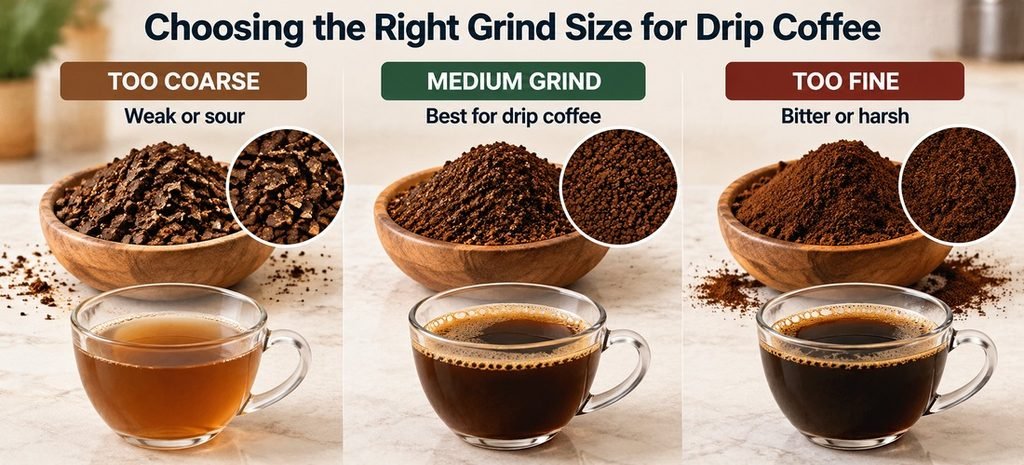
Drip coffee generally works best with a medium grind, similar in texture to regular granulated sugar. The ideal setting can vary depending on the coffee maker, filter, and brewing time.
- Too coarse: Water may pass through quickly, leaving the coffee weak or sour.
- Too fine: Water may flow more slowly, and the coffee can taste bitter or harsh.
- Medium grind: A practical starting point for most automatic drip coffee makers.
Grind size affects how quickly water extracts flavor from the coffee grounds. A finer grind exposes more surface area, while a coarser grind slows extraction.
How Much Coffee Do You Need for Drip Coffee?
The amount depends on how much coffee you want to brew and how strong you prefer it. Measuring by weight is more reliable than using scoops because scoop sizes and coffee density vary.
| Water | Ground coffee |
|---|---|
| 250 ml | 15–16 g |
| 500 ml | 30–32 g |
| 750 ml | 45–47 g |
| 1 liter | 60–63 g |
These measurements can be adjusted to suit your preferred strength. Also, check your coffee maker’s instructions because its cup markings may represent smaller servings than a standard 8-ounce cup.
The Best Coffee-to-Water Ratio for Drip Coffee
A 1:16 ratio is a reliable starting point for drip coffee. This means using 1 gram of ground coffee for every 16 grams of water.
You can adjust the ratio depending on your taste:
| Ratio | Result |
|---|---|
| 1:15 | Stronger, fuller flavor |
| 1:16 | Balanced starting point |
| 1:17 | Lighter, less concentrated coffee |
For example, 30 grams of coffee with 480 grams of water gives you a 1:16 ratio. If the result tastes too strong, try adding more water to the next brew.
How to Make Drip Coffee Step by Step
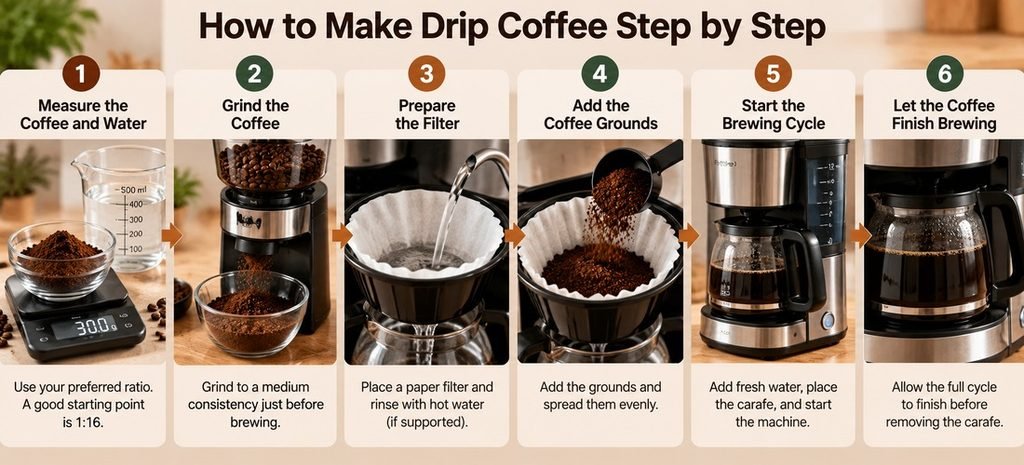
Brewing drip coffee is straightforward, but following a consistent routine makes it easier to achieve good results.
1. Measure the Coffee and Water
Choose your desired ratio and weigh the coffee and water. Start with 1:16 if you are unsure where to begin.
2. Grind the Coffee
Grind whole beans to a medium consistency just before brewing. If you use pre-ground coffee, choose a product intended for drip coffee makers.
3. Prepare the Filter
Place the correct filter in the basket. If you use a paper filter, rinse it with hot water when practical and supported by your machine. This can reduce papery flavors and warm the brewing components. Empty any rinse water from the carafe before brewing.
4. Add the Coffee Grounds
Spread the grounds evenly in the filter basket. An even bed of coffee helps water pass through more consistently.
5. Start the Brewing Cycle
Add fresh water to the reservoir, check that the carafe is positioned correctly, and start the machine. Use the manufacturer’s recommended settings if your coffee maker offers temperature or strength controls.
6. Let the Coffee Finish Brewing
Allow the full cycle to finish before removing the carafe. Avoid opening the basket during brewing, as this can interrupt the process or create a mess.
7. Serve and Taste
Stir the brewed coffee gently before serving to distribute its flavors more evenly. Taste it once it has cooled slightly, then adjust the grind or ratio for your next batch.
How Long Does Drip Coffee Take to Brew?
Most automatic drip coffee makers take approximately 4–8 minutes to brew a typical pot, although larger batches and different machines may take longer.
The brewing time depends on the machine’s design, the amount of water, the grind size, and the brewing cycle. A longer cycle does not automatically mean better coffee.
If brewing takes too long or tastes harsh, check for a fine grind or clogged filter. If it brews too quickly and tastes weak, adjust the grind size or check your coffee maker.
What Temperature Should Water Be for Drip Coffee?

Water temperature affects how well coffee grounds release their flavors. Water that is too cool can produce a flat, underdeveloped cup.
The ideal range for drip coffee is 195–205°F (90–96°C). Most automatic coffee makers regulate the temperature, so you usually don’t need a separate thermometer.
If your coffee tastes sour or bitter, try adjusting the grind size or coffee-to-water ratio.
Common Drip Coffee Brewing Mistakes
Small inconsistencies can change the flavor of an entire pot. These are some of the most common problems to watch for:
- Wrong grind size: Can make coffee sour or bitter.
- Too little coffee: Produces a weak, watery brew.
- Stale beans: Reduce freshness and aroma.
- Poor water quality: Adds unwanted flavors.
- Wrong filter: Can affect water flow and extraction.
- Prolonged heating: Makes coffee taste stale or burnt.
- Dirty equipment: Leaves unpleasant flavors from coffee oils and mineral deposits.
The easiest way to improve your drip coffee is to keep your recipe consistent and change one variable at a time. Start with fresh coffee, a medium grind, clean equipment, and a 1:16 ratio, then adjust according to taste.