
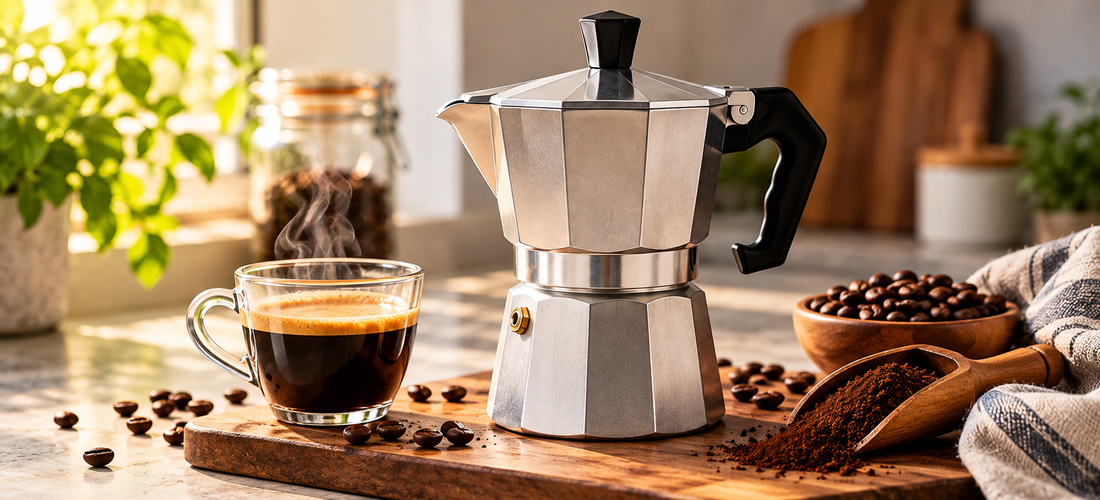
A moka pot brews rich, concentrated coffee on the stovetop using heat and pressure. With the right grind size and brewing technique, you can make flavorful coffee at home without an espresso machine.
What Is a Moka Pot?
A moka pot is a stovetop coffee maker that uses heat and pressure to brew concentrated coffee. It has three main parts: a water chamber, a coffee filter basket, and an upper chamber for the finished brew.
The main features of a moka pot include:
- Three-part design: Separates the water, coffee grounds, and brewed coffee.
- Stovetop brewing: Works on compatible gas, electric, or other suitable heat sources.
- Reusable construction: Usually made from aluminum or stainless steel.
- Concentrated coffee: Bold flavor, served black or with milk.
Moka pots come in different sizes and are easy to maintain. They need no electric pump or paper filters, making them a convenient choice for home brewing.
How Does a Moka Pot Work?

When water in the bottom chamber heats up, pressure pushes it through the coffee grounds and into the upper chamber. The filter basket holds the grounds in place while the brewed coffee flows through a central tube.
The process involves three basic stages:
- Heating: Water warms inside the sealed lower chamber.
- Extraction: Hot water passes through the ground coffee under pressure.
- Collection: The brewed coffee rises into the upper chamber.
A moka pot uses much less pressure than a typical espresso machine, so its coffee is concentrated but not technically espresso.
Essential Equipment for Making Moka Pot Coffee
Making moka pot coffee at home requires only a few basic tools. The right equipment helps you measure coffee accurately, achieve consistent results, and keep your moka pot in good condition.
- Moka pot: Choose a size that suits the number of servings you usually make.
- Coffee grinder: A burr grinder helps produce a consistent grind.
- Kitchen scale: Useful for measuring coffee and reproducing successful brews.
- Heat source: Use a compatible stovetop or heating surface.
- Cup or small carafe: Makes it easy to serve the finished coffee.
A thermometer is optional. Most beginners can get good results by controlling the heat and watching the coffee as it flows.
Choosing the Right Coffee Beans and Grind Size for a Moka Pot
Medium to medium-dark roasts are a good starting point for moka pot brewing. They often produce balanced coffee with chocolate, nutty, or caramel notes.
Grind size is equally important. Aim for a medium-fine grind, slightly finer than typical drip coffee but coarser than most espresso grinds.
Follow these tips for better results:
- Avoid an excessively fine grind: It can restrict water flow and increase the risk of harsh extraction.
- Use a consistent grind: Uneven particles can lead to inconsistent flavor.
- Choose fresh coffee: Beans used soon after roasting and ground just before brewing generally retain more aroma.
- Do not tamp the grounds: Compacting the coffee can obstruct water flow.
If your coffee tastes bitter, try a slightly coarser grind or lower heat. If it tastes weak or sour, check your grind consistency and brewing technique before changing several variables at once.

What Is the Best Coffee-to-Water Ratio for a Moka Pot?
Unlike pour-over coffee, a moka pot is not usually brewed with a freely adjustable coffee-to-water ratio. The basket and lower chamber determine most of the quantities.
For a consistent brew:
- Fill the bottom chamber with water up to, but not above, the safety valve.
- Fill the filter basket with ground coffee, keeping the surface level without pressing it down.
- Follow the capacity recommendations for your particular model.
The amounts vary by manufacturer, but the following figures are useful starting estimates:
| Moka Pot Size | Approximate Water | Approximate Ground Coffee |
|---|---|---|
| 1–2 cup | 60–100 ml | 6–10 g |
| 3 cup | 120–180 ml | 12–18 g |
| 6 cup | 250–300 ml | 25–30 g |
These are approximate ranges, not universal specifications. Check your pot’s instructions, since capacities and basket sizes differ.
How to Make Moka Pot Coffee Step by Step
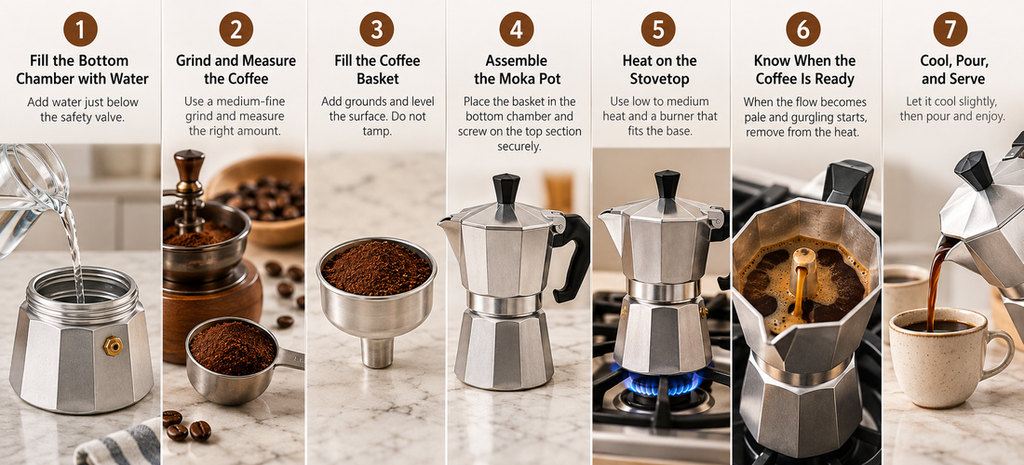
Making moka pot coffee is straightforward once you understand how each part works. Follow these steps for a balanced brew.
Step 1: Fill the Bottom Chamber with Water
Pour water into the lower chamber, stopping just below the safety valve. Some brewers prefer starting with hot water to reduce the time the coffee grounds spend heating, but the water should be handled carefully to avoid burns.
Step 2: Grind and Measure the Coffee
Grind fresh beans to a medium-fine consistency. Measure enough coffee to fill the filter basket according to your moka pot’s capacity.
Step 3: Fill the Coffee Basket
Add the grounds and level the surface gently. Do not tamp or press the coffee down, as this can interfere with water flow.
Step 4: Assemble the Moka Pot
Place the filter basket into the lower chamber and screw on the upper section securely. If you used hot water, hold the lower chamber with a towel or heat-resistant glove.
Make sure the threads and sealing surfaces are clean and that the gasket is properly positioned.
Step 5: Heat the Moka Pot on the Stovetop
Place the pot over low to medium heat. Keep the handle away from direct flames and use a burner that fits the base. The coffee should emerge steadily rather than erupting rapidly.
Step 6: Know When the Coffee Is Ready
Watch as the coffee flows into the upper chamber. When the stream becomes pale and the pot begins to make a gurgling sound, remove it from the heat. Avoid allowing the pot to sputter for a long time, as this can produce harsh flavors.
Step 7: Cool, Pour, and Serve
Once brewing stops, carefully pour the coffee into cups. You can serve it as it is, add hot water for a milder drink, or mix it with steamed milk. Allow the pot to cool before taking it apart for cleaning.
Moka Pot vs. Espresso: Key Differences
Moka pot coffee and espresso can both taste rich and concentrated, but the brewing methods are different.
| Feature | Moka Pot | Espresso Machine |
|---|---|---|
| Pressure | Lower pressure generated by heating water | Typically around 9 bars during extraction |
| Brewing method | Stovetop water pressure | Pump- or lever-driven extraction |
| Flavor | Concentrated, often bold | Concentrated, often with a thicker crema |
| Equipment | Simple stovetop pot | Dedicated espresso machine |
| Control | More limited adjustment | Greater control over pressure and extraction |
A moka pot is a practical option for people who enjoy strong coffee without investing in an espresso machine.
How Long Does Moka Pot Coffee Take to Brew?
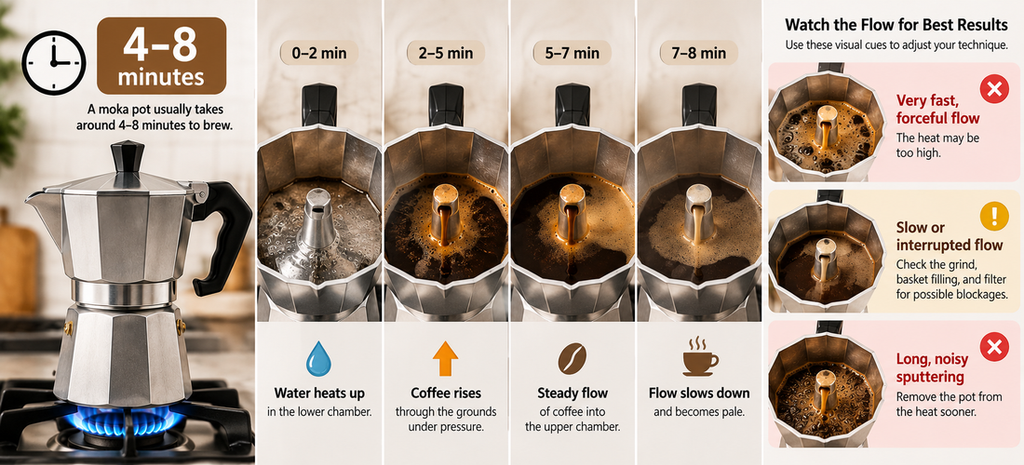
A moka pot commonly takes around 4–8 minutes to brew, although the total time depends on the pot’s size, the starting water temperature, and the heat level. Preparation and cooling add a little more time.
Use these general observations as a guide:
- Very fast, forceful flow: The heat may be too high.
- Slow or interrupted flow: Check the grind, basket filling, and filter for possible blockages.
- Long, noisy sputtering: Remove the pot from the heat sooner.
Rather than relying on a strict timer, watch the coffee flow and listen for the change in sound near the end of brewing.
How to Adjust Moka Pot Coffee Strength and Flavor
Small adjustments can help you find a flavor that suits your preferences. Start by changing one variable at a time so you can identify what improves the result.
- Less bitterness: Use a coarser grind and lower heat.
- Stronger coffee: Choose a darker roast.
- Smoother flavor: Try a medium roast and steady heat.
- Fix weak or sour coffee: Check the grind size and use fresh beans.
- Consistent results: Keep coffee and water amounts the same each time.
Clean the filter and gasket regularly, and make sure the safety valve remains unobstructed. With a consistent technique and a few small adjustments, a moka pot can produce flavorful coffee for everyday brewing.