
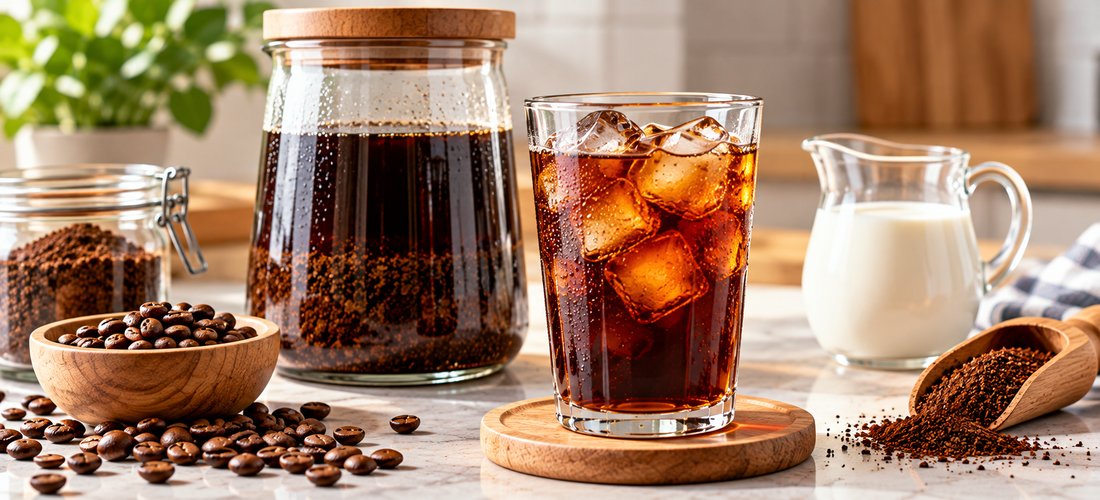
Cold brew coffee is made by steeping ground coffee in cool water for several hours. It produces a refreshing drink with a smooth flavor that you can enjoy over ice or mix with milk.
What Is Cold Brew Coffee?
Cold brew coffee is made by steeping ground coffee in cold or room-temperature water for several hours. It produces a smooth, refreshing drink that can be served directly or diluted with water or milk.
Why make cold brew at home?
- Smooth taste: Cold brew often has a mellow flavor with less noticeable acidity than hot-brewed coffee.
- Easy preparation: Most of the brewing time requires no active work.
- Flexible strength: Adjust the coffee-to-water ratio to suit your preference.
- Convenient storage: Prepare a batch in advance and refrigerate the filtered coffee.
Cold brew works with many coffee varieties, so you can experiment with different roasts and beans to find your preferred flavor.
How Does Cold Brew Coffee Work?
Cold brew extracts soluble compounds from coffee grounds through prolonged contact with water. Since the water is cooler than in conventional hot brewing, the process usually takes many hours.

The basic process has three stages:
- Steeping: Combine ground coffee and water in a container and leave the mixture undisturbed or stir it gently.
- Filtering: Separate the liquid from the grounds using a fine-mesh strainer, paper filter, or dedicated cold brew filter.
- Serving: Pour the coffee over ice or dilute it with water or milk if needed.
Grind size, water quality, coffee freshness, and steeping time all influence the final result. Keeping these factors consistent makes it easier to adjust the flavor from one batch to the next.
Cold Brew vs. Iced Coffee: What’s the Difference?
Cold brew and iced coffee are both served cold, but they differ in preparation. Iced coffee is generally brewed with hot water and then cooled, while cold brew steeps in cool water for an extended period.
| Feature | Cold Brew | Iced Coffee |
|---|---|---|
| Brewing method | Steeped in cool water | Usually brewed hot |
| Brewing time | Several hours | Usually a few minutes |
| Typical flavor | Smooth and mellow | Often brighter and more aromatic |
| Preparation | Best made ahead | Can be prepared more quickly |
| Serving | Over ice, diluted if needed | Over ice |
Cold brew is convenient for preparing batches in advance, while iced coffee is a practical choice when you want a cold drink without waiting hours for extraction.
Essential Equipment for Making Cold Brew Coffee
You don’t need a specialized machine to make cold brew. A simple container and a reliable way to filter the grounds are enough to get started.
- Glass jar or pitcher: Holds the coffee and water during steeping.
- Coffee grinder: Provides a consistent coarse grind.
- Digital scale: Helps maintain an accurate coffee-to-water ratio.
- Fine-mesh strainer or filter: Removes the grounds after brewing.
- Storage bottle: Keeps the finished coffee covered in the refrigerator.
A dedicated cold brew maker can simplify filtering, but a regular jar works well for beginners. Choose a container with enough room for both the water and coffee grounds.
Choosing the Right Coffee Beans and Grind Size for Cold Brew
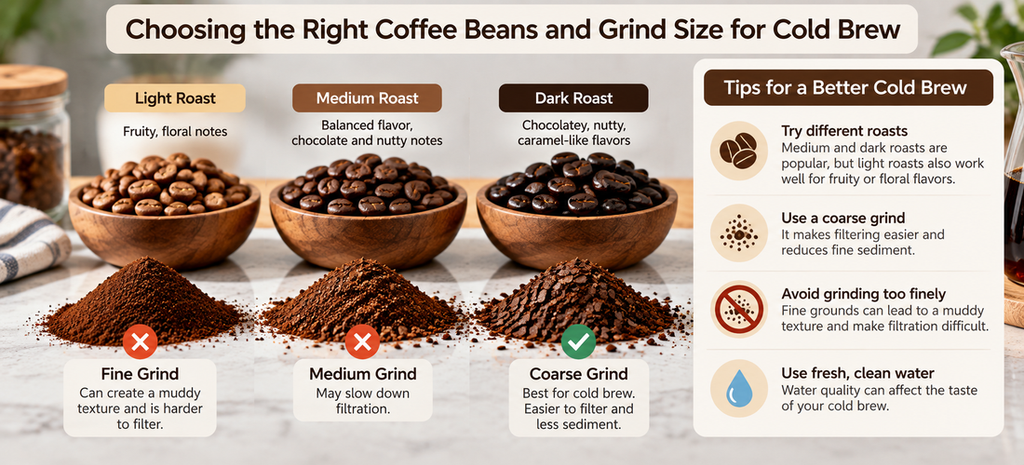
Medium and dark roasts are popular for cold brew because they can produce chocolatey, nutty, or caramel-like flavors. Light roasts also work well if you prefer fruity or floral notes.
Use these tips to improve your brew:
- Start with a coarse grind: It helps make filtering easier and reduces the amount of fine sediment.
- Avoid grinding too finely: Fine grounds can create a muddy texture and make filtration more difficult.
- Experiment with roast levels: Different beans can produce noticeably different flavors.
- Use fresh, clean water: Water quality can affect the taste of the finished coffee.
If your cold brew tastes weak, adjust the ratio or steeping time before making several changes at once.
What Is the Best Coffee-to-Water Ratio for Cold Brew?
The ideal ratio depends on whether you want a concentrate or coffee that is ready to drink. A ratio of 1:8 is a useful starting point for concentrate, while 1:12 can work well for a less concentrated batch.
| Coffee | Water | Suggested Use |
|---|---|---|
| 100 g | 800 g | Concentrated cold brew |
| 75 g | 900 g | Less concentrated cold brew |
| 50 g | 800 g | Lighter brew |
These ratios are starting points rather than strict rules. Use a little more coffee for a stronger result or more water for a lighter drink.
How to Make Cold Brew Coffee Step by Step
Follow this simple step-by-step recipe to make smooth, flavorful cold brew coffee at home without special equipment. You’ll need only coarsely ground coffee, water, and a container, plus a few hours for steeping.
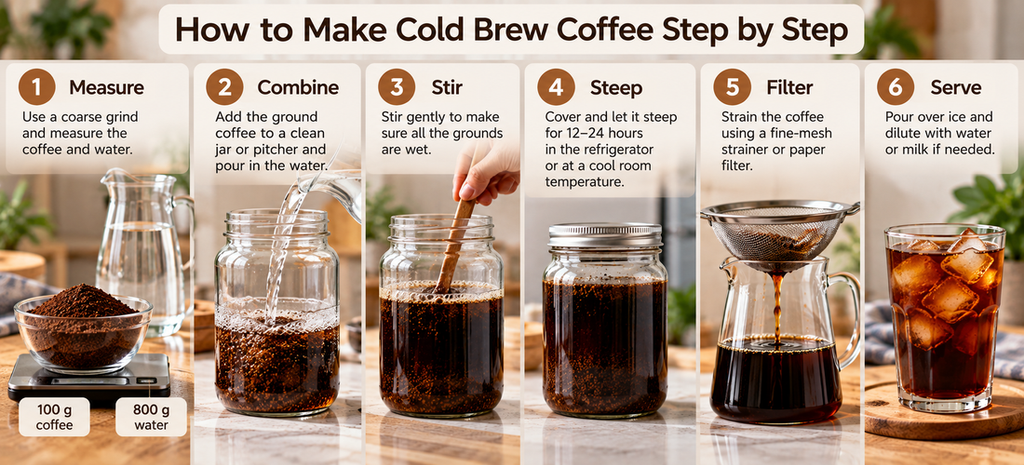
Step 1: Measure the Coffee and Water
For a concentrated batch, start with 100 g of coarsely ground coffee and 800 g of water.
Step 2: Add the Ingredients
Place the coffee grounds in a clean jar or pitcher. Pour in the water, making sure all the grounds become wet.
Step 3: Stir Gently
Stir the mixture to distribute the grounds evenly. Cover the container to keep out dust and other contaminants.
Step 4: Let the Coffee Steep
Place the container in the refrigerator or leave it at a cool room temperature while it steeps. Start with 12–18 hours and adjust the time according to your preferred flavor.
Step 5: Filter the Coffee
Strain the mixture through a fine-mesh strainer or coffee filter. For a cleaner cup, pass it through a paper filter if necessary.
Step 6: Serve and Adjust
Pour the finished coffee over ice. Dilute the concentrate with water or milk until it reaches your preferred strength.
Store the filtered coffee in a covered container in the refrigerator.
How Long Should Cold Brew Coffee Steep?
Cold brew usually needs 12–24 hours of steeping, although the ideal time depends on the grind size, coffee beans, water temperature, and recipe.
| Steeping Time | Possible Result |
|---|---|
| 8–12 hours | Lighter flavor in some recipes |
| 12–18 hours | A useful starting range for many home brews |
| 18–24 hours | Often produces a fuller, more developed flavor |
These ranges are guidelines, not guaranteed flavor outcomes. A finer grind or different coffee variety can change the extraction rate.
If the coffee tastes weak, try a longer steep or a slightly stronger ratio. If it tastes harsh or overly intense, shorten the steeping time or adjust the ratio. Refrigerate the filtered coffee promptly and keep it covered.
Cold Brew Concentrate vs. Ready-to-Drink Coffee: What’s the Difference?
Cold brew concentrate contains more coffee relative to the water used during brewing. It is usually diluted before serving, while ready-to-drink cold brew is prepared at a strength intended for direct consumption.
| Feature | Cold Brew Concentrate | Ready-to-Drink Cold Brew |
|---|---|---|
| Strength | More concentrated | Usually less concentrated |
| Preparation | Often diluted before serving | Can be served directly |
| Coffee-to-water ratio | Commonly around 1:4 to 1:8 | Often around 1:10 to 1:15 |
| Serving options | Water, milk, or ice | Ice, milk, or direct serving |
| Best for | Customizing strength and making smaller servings | Convenient everyday drinking |
For concentrate, start by mixing equal parts coffee and water, then adjust to taste. Ready-to-drink cold brew generally needs less dilution, although ice and milk can still be added.