
French press coffee is known for its full body, rich aroma, and simple brewing process. Unlike drip coffee, it steeps the grounds directly in water, which allows more oils and flavor compounds to remain in the cup.
What Is French Press Coffee?
French press coffee is a full-immersion brewing method in which coarsely ground coffee stays submerged in hot water before being separated with a metal mesh plunger.
A typical French press has four main parts:
- Brewing beaker — usually made from glass, stainless steel, or heat-resistant plastic.
- Plunger — used to separate the brewed coffee from the grounds.
- Metal mesh filter — traps most of the coffee grounds while allowing oils and fine particles through.
- Lid and handle — help contain heat and make pouring easier.
The brewing method is simple, but the final flavor depends heavily on grind size, water temperature, coffee-to-water ratio, and steeping time.
French Press Brewing Basics
French press brewing is simple, but a few variables strongly affect the final flavor. Grind size, water temperature, coffee-to-water ratio, and steeping time are the main factors to control.
| Brewing factor | Recommended starting point |
|---|---|
| Coffee grind | Coarse |
| Water temperature | About 195–205°F (90–96°C) |
| Coffee-to-water ratio | Around 1:15 |
| Steeping time | About 4 minutes |
| Filter | Metal mesh |
These measurements provide a reliable starting point, but they do not have to be followed rigidly.
Best Grind Size for French Press

A coarse grind is the best choice for French press coffee. The grounds should look similar to coarse sea salt, with relatively large and even particles. This helps slow extraction and makes the coffee easier to filter through the metal mesh.
| Grind size | Typical result |
|---|---|
| Coarse | Balanced, full-bodied, easier to press |
| Medium | Faster extraction, may taste more bitter |
| Fine | More sediment, bitter taste, difficult to press |
A grind that is too fine can over-extract the coffee and leave a muddy cup, while an overly coarse grind may produce weak or under-extracted flavors.
What Is the Best Coffee-to-Water Ratio?
A 1:15 coffee-to-water ratio is a good starting point for French press brewing. This means using 1 gram of coffee for every 15 grams of water.
| Coffee | Water |
|---|---|
| 20 g | 300 g |
| 30 g | 450 g |
| 40 g | 600 g |
| 50 g | 750 g |
You can adjust the ratio to match your taste. More coffee creates a stronger, fuller brew, while adding more water produces a lighter cup.
How Long Should French Press Coffee Steep?
A 4-minute steeping time is a reliable starting point for most French press recipes. During this time, the coffee grounds remain fully immersed in hot water, allowing the flavors and natural oils to extract properly.
For a balanced result, follow these simple guidelines:
- 3 minutes: lighter and less intense coffee
- 4 minutes: balanced flavor and body
- 5 minutes: stronger and more pronounced flavor
- Over 5 minutes: may increase bitterness and a dry aftertaste
After steeping, press the plunger slowly and pour the coffee immediately. Leaving brewed coffee in the French press allows extraction to continue and can make the cup taste more bitter.
Coffee Beans That Work Best for French Press
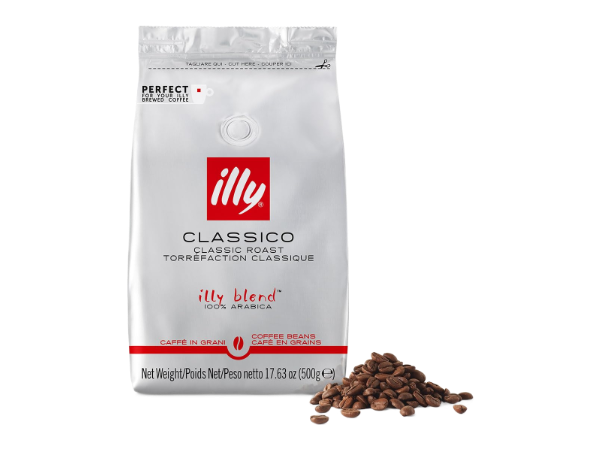
French press coffee works well with many roast levels, but medium and medium-dark roasts are especially popular because they complement the method’s rich body.
Good options include:
- Chocolate and nutty medium roasts
- Caramel-forward blends
- Medium-dark roasts with lower acidity
- Freshly roasted whole beans
- Single-origin beans for more distinctive flavors
Dark roasts can also work well, especially if you prefer a bold, smoky cup. Lighter roasts may highlight fruity or floral notes but can require more careful brewing.
How to Make French Press Coffee Step by Step
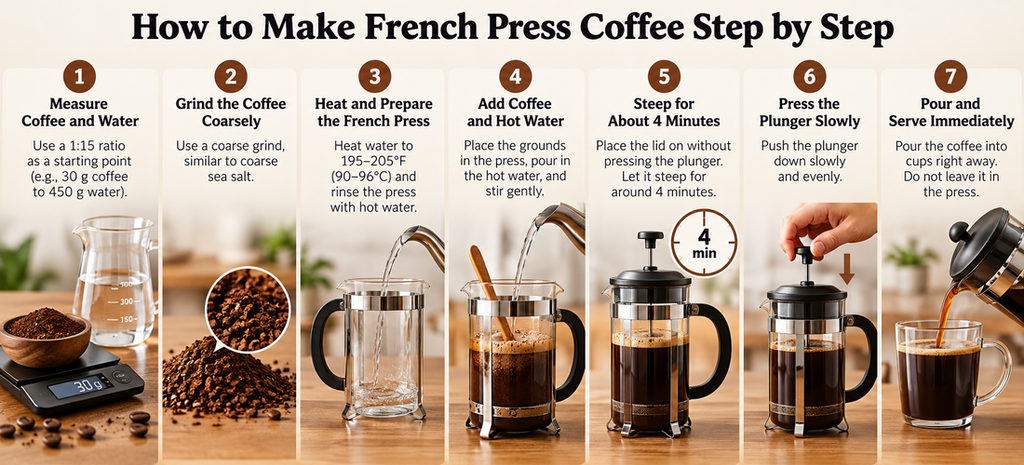
Making French press coffee takes only a few minutes and requires basic equipment. The key is to keep the coffee grind coarse, water hot but not boiling, and brewing time consistent.
1. Measure the Coffee and Water
Use a 1:15 coffee-to-water ratio as a starting point. For example, 30 g of coffee works well with about 450 g of water.
2. Grind the Coffee Coarsely
Grind fresh beans to a coarse, even consistency, similar to coarse sea salt. This helps prevent excessive sediment and bitterness.
3. Heat and Prepare the French Press
Heat water to 195–205°F (90–96°C). Rinse the French press with a little hot water first to warm the brewer and help maintain a stable brewing temperature.
4. Add Coffee and Hot Water
Place the coffee grounds in the press and slowly pour in the hot water. Make sure all the grounds are saturated, then stir gently for even extraction.
5. Steep for About 4 Minutes
Place the lid on the press without pushing the plunger down. Let the coffee steep for around 4 minutes. Adjust the time slightly depending on your preferred strength.
6. Press the Plunger Slowly
Push the plunger down slowly and evenly until the grounds are separated from the brewed coffee. Avoid using excessive force, which can increase sediment.
7. Pour and Serve Immediately
Pour the coffee into cups or a separate carafe right after pressing. Leaving it in the French press can lead to continued extraction and a more bitter taste.
Common French Press Brewing Mistakes
French press coffee is easy to make, but a few common mistakes can lead to bitter, weak, or overly gritty coffee. Most problems come from using the wrong grind size, water temperature, coffee ratio, or steeping time.
| Mistake | What can happen |
|---|---|
| Fine grind | Bitter taste and more sediment |
| Boiling water | Harsh or overly extracted flavors |
| Too much coffee | Heavy, intense brew |
| Too little coffee | Weak or thin flavor |
| Very long steep | Bitter or dry finish |
| Pressing too fast | More grounds in the cup |
| Leaving coffee in the press | Continued extraction and bitterness |
Using a coarse, consistent grind and properly heated water can prevent many of these issues. It is also better to pour the coffee into a separate cup or carafe after brewing instead of letting it sit with the grounds.
Best French Press Coffee Makers to Try
Glass French presses are easy to monitor during brewing and often have a classic design. Stainless steel models offer better durability and heat retention, making them useful for frequent use.
When choosing a model, look for:
- A sturdy plunger and filter
- Easy-to-clean parts
- A comfortable handle
- Durable materials
- A size that matches your usual serving amount
French press coffee does not require complicated techniques. Start with a coarse grind, a 1:15 ratio, hot water, and a 4-minute steep, then adjust one variable at a time.
