Coffee beans determine much of what ends up in your cup, from aroma and acidity to sweetness, body, and bitterness. But choosing beans can be confusing when packages mention different varieties, origins, roast levels, and processing methods.
Best Coffee Beans
The best coffee beans are not necessarily the most expensive or the rarest. The right choice depends on the flavor you enjoy, how you brew coffee, and how fresh the beans are.
When buying coffee beans, pay attention to:
- Bean type: Arabica and Robusta are the most common, while Liberica and Excelsa are less widely available.
- Roast level: Light, medium, and dark roasts create different flavor profiles.
- Origin: Growing region can influence acidity, sweetness, body, and aroma.
- Processing: Washed, natural, and honey-processed coffees can taste noticeably different.
- Whole bean format: Grinding immediately before brewing gives you better control over grind size and freshness.
For everyday brewing, a fresh whole bean coffee with a clearly identified roast date and origin is a good starting point.
Coffee Beans by Roast Level
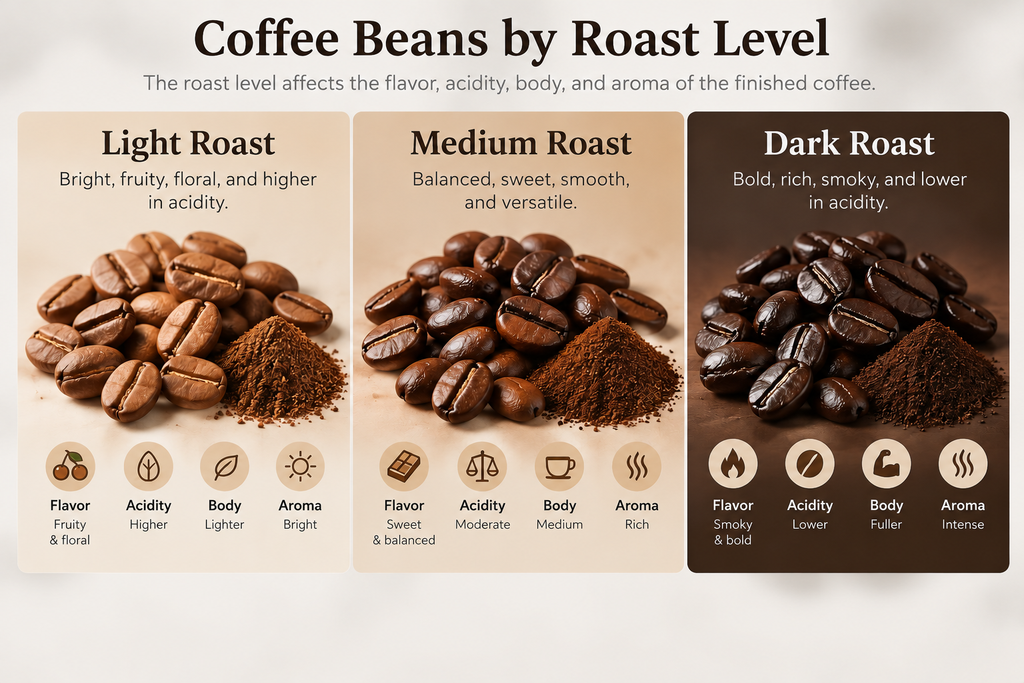
Roasting changes the physical and chemical characteristics of coffee beans. As roasting progresses, the beans become darker and develop more pronounced roasted flavors.
- Light Roast Coffee Beans — bright, fruity, floral, and higher in acidity.
- Medium Roast Coffee Beans — balanced, sweet, smooth, and versatile.
- Dark Roast Coffee Beans — bold, rich, smoky, and lower in acidity.
Your choice of roast depends mainly on your preferred flavor profile. Light roasts highlight the character of the beans, medium roasts offer a balanced cup, while dark roasts emphasize deeper roasted flavors.
Light Roast Coffee Beans
Light roast beans spend less time in the roaster and tend to retain more of the characteristics associated with their origin. They can have bright acidity and flavors such as citrus, berries, flowers, or stone fruit.
Light roasts are often a good choice when you want to explore the differences between coffee-growing regions and individual lots.
Medium Roast Coffee Beans
Medium roast beans offer a balance between the original characteristics of the coffee and flavors developed during roasting. Common notes include caramel, chocolate, nuts, fruit, and brown sugar.
Because of their balanced character, medium roasts are a versatile option for everyday coffee.
Dark Roast Coffee Beans
Dark roast beans develop stronger roasted flavors and usually have lower perceived acidity. Depending on the coffee, they can taste smoky, bittersweet, rich, or dark chocolate-like.
Dark roasts are often preferred by people who enjoy a bold, traditional coffee profile.
Types of Coffee Beans
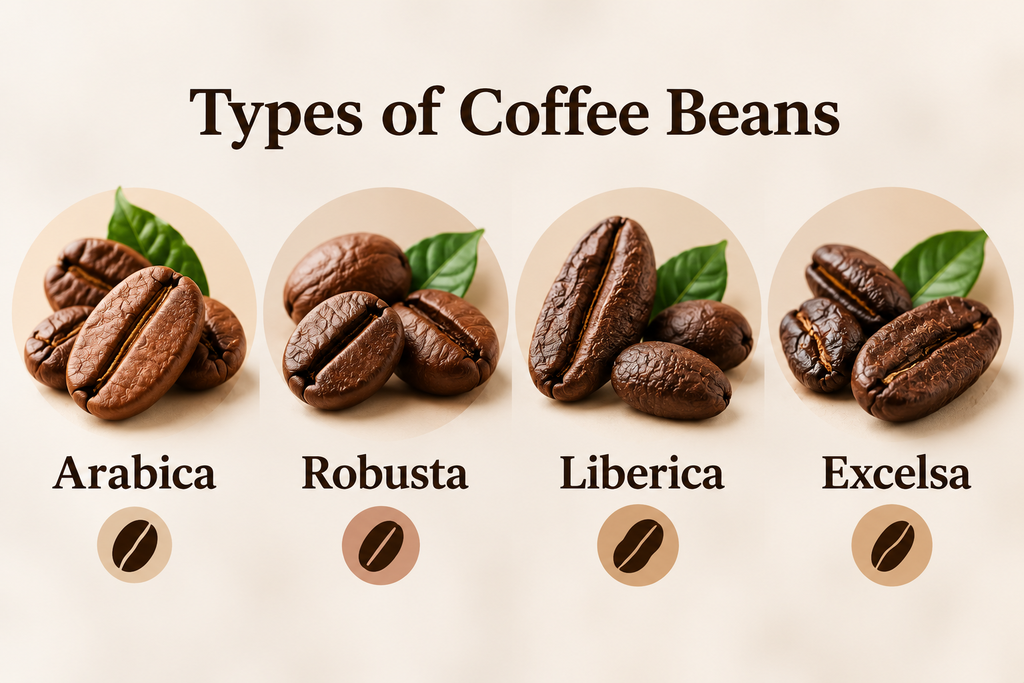
Coffee comes from several species and varieties, but most coffee sold around the world is associated with Arabica or Robusta.
Arabica Coffee Beans
Arabica is widely used in specialty coffee and is valued for its broad range of flavors. Depending on the origin and processing method, Arabica can produce notes of fruit, flowers, chocolate, nuts, spices, and caramel.
Its flavor can vary considerably from one coffee-growing region to another.
Robusta Coffee Beans
Robusta belongs to the Coffea canephora species and is known for its stronger flavor and higher caffeine content compared with Arabica.
Robusta can contribute additional body and bitterness to coffee and is commonly used in blends, including some espresso blends.
Liberica and Excelsa
Liberica is much less common than Arabica and Robusta but has a distinctive flavor profile that can include fruity, floral, woody, or smoky characteristics.
Excelsa is now generally classified within the Liberica species. It remains relatively uncommon and is more likely to appear in specialty or regional coffees than mainstream supermarket products.
Coffee Bean Freshness & Storage
Freshness is one of the most important factors in coffee quality. Oxygen, moisture, heat, and light can all accelerate the deterioration of roasted beans.
How to Store Coffee Beans
Keep coffee beans in an airtight container in a cool, dry, and dark place.
Avoid storing them:
- beside a stove or oven;
- in direct sunlight;
- in humid areas;
- in an open container;
- where the package is repeatedly exposed to air.
You also generally do not need to keep regularly used coffee beans in the refrigerator. Temperature changes and moisture can create unwanted conditions for the beans.
How Long Do Coffee Beans Last?
Coffee beans gradually lose freshness rather than suddenly becoming unusable on a particular date. The exact period depends on the roast, packaging, storage conditions, and how often the container is opened.
Freshly roasted coffee also releases carbon dioxide for a period after roasting, so the newest possible beans are not always immediately at their best for every brewing method.
The most practical approach is to buy an amount that you can reasonably consume before the coffee develops a noticeably flat or stale flavor.
Coffee Beans by Origin
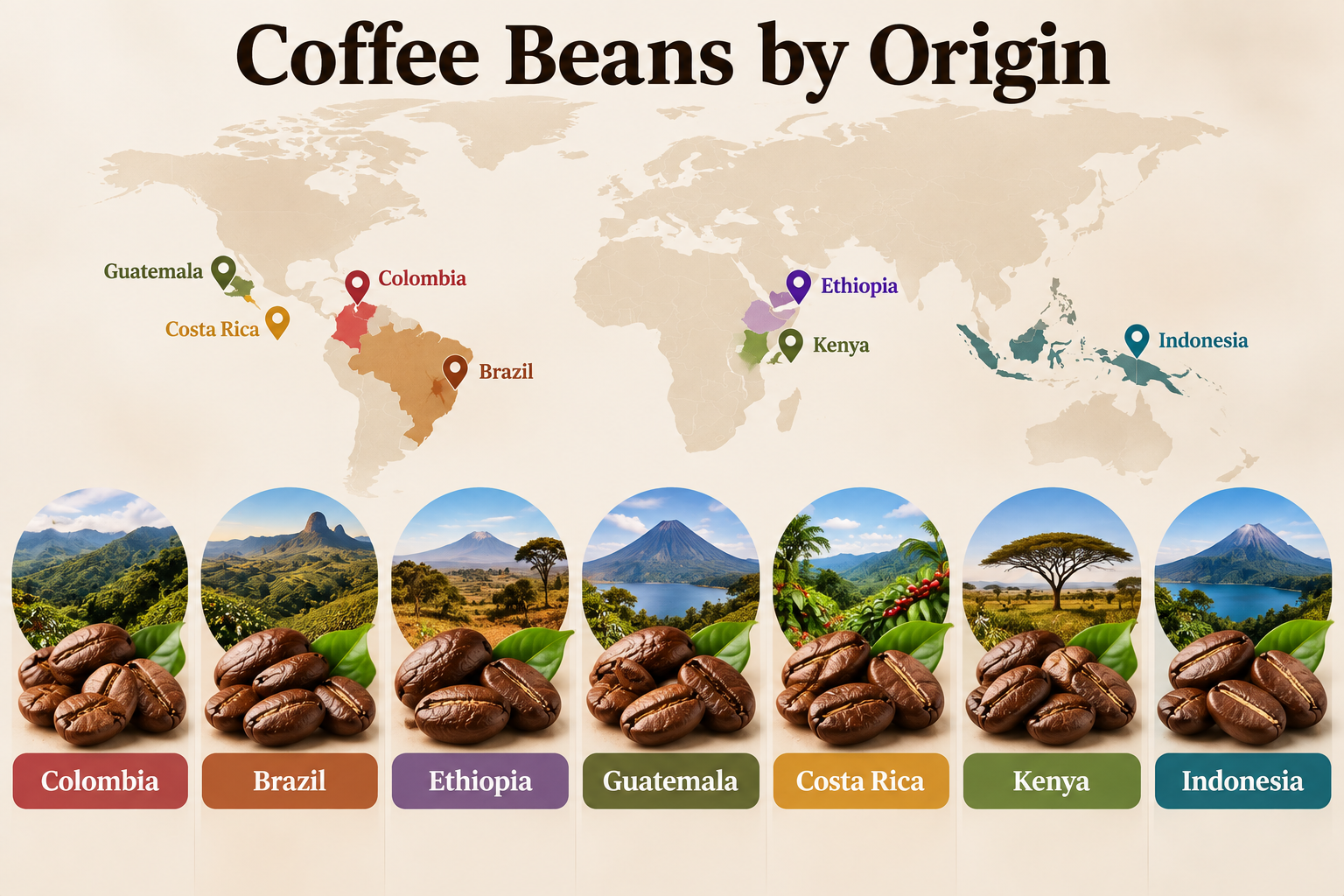
Coffee is grown across tropical regions around the world, with each producing area offering different growing conditions and coffee varieties.
Colombian Coffee Beans
Colombian coffee is often associated with balanced acidity, sweetness, and medium body. Depending on the region and processing method, cups can feature caramel, chocolate, nuts, or fruit.
Brazilian Coffee Beans
Brazil produces a wide range of coffees. Many Brazilian beans are known for sweet, nutty, chocolate-like profiles and relatively moderate acidity. They are also widely used in coffee blends.
Ethiopian Coffee Beans
Ethiopian coffee is particularly diverse. Depending on the region and processing method, beans can show floral, citrus, berry, stone fruit, or tea-like characteristics.
Guatemalan Coffee Beans
Guatemalan coffees can combine sweetness, acidity, body, and complexity. Chocolate, caramel, fruit, nuts, and spice are among the flavors that may appear.
Costa Rican Coffee Beans
Costa Rican coffee is often associated with clean flavors, noticeable acidity, sweetness, and a balanced body. Washed coffees are especially common.
Kenyan Coffee Beans
Kenyan coffee is known for its bright acidity and fruit-forward character. Berry, citrus, and wine-like notes can appear in coffees from different growing areas.
Indonesian Coffee Beans
Indonesian coffees are often recognized for fuller body and earthy, herbal, spicy, or chocolate-like flavors. Sumatra is one of the best-known coffee origins in the region.