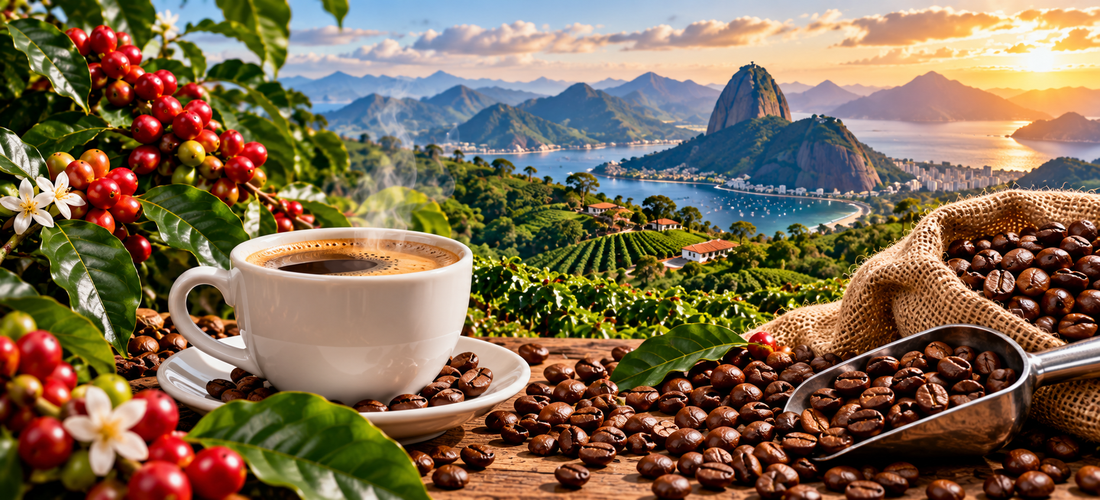
Brazilian coffee is known for its smooth body, natural sweetness, and familiar flavors such as chocolate, nuts, caramel, and brown sugar.
What Is Brazilian Coffee? History, Origins & Characteristics
Brazilian coffee is coffee grown in Brazil, the world’s largest coffee-producing country. Coffee production is concentrated mainly in the southeastern part of the country, where altitude, climate, soil, and processing methods create very different flavor profiles.
Common characteristics of Brazilian coffee include:
- Smooth body: Rounded and full-bodied.
- Natural sweetness: Chocolate, caramel, and brown sugar notes.
- Low acidity: Often smoother and less acidic than many bright coffees.
- Nutty flavors: Hazelnut, almond, and other roasted-nut notes.
- Flavor variety: Specialty beans can offer fruit, citrus, and floral notes.
Brazil is particularly important for espresso because its balanced sweetness and body can work well in both straight shots and milk-based drinks.
Best Brazilian Coffee Beans: Top Picks
The best Brazilian coffee depends on your preferred roast, brewing method, and flavor profile. For a classic Brazilian cup, look for medium or medium-dark beans with chocolate, caramel, or nutty notes.
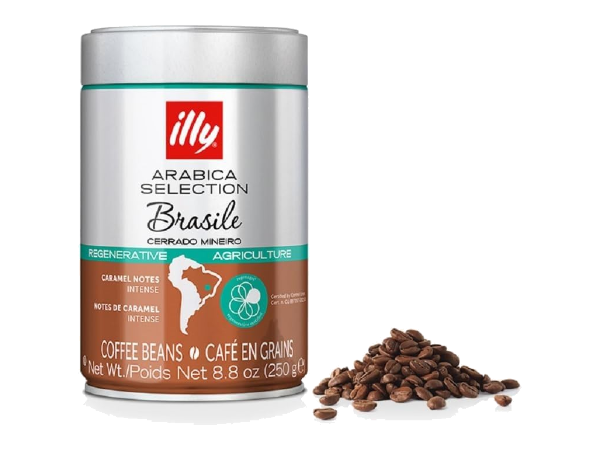
illy Arabica Selections Brasile – Cerrado Mineiro Whole Bean Coffee
illy Arabica Selections Brasile comes from Brazil’s Cerrado Mineiro region and is made from 100% Arabica beans.
Key features:
- Origin: Cerrado Mineiro, Brazil
- Bean type: 100% Arabica
- Roast: Medium-dark
- Flavor: Intense caramel, with dried-fruit notes
- Size: 8.8 oz (250 g)
Its combination of sweetness, body, and moderate intensity makes it particularly suitable for readers looking for a Brazilian coffee that can also perform well in espresso.
Lavazza Tierra! Selection Whole Bean Coffee Blend, Medium Roast
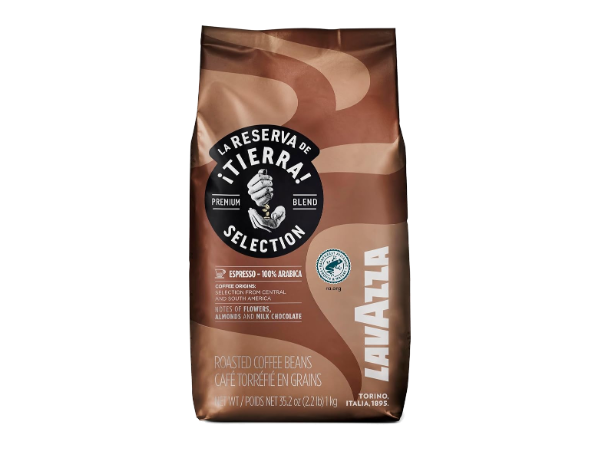
Lavazza Tierra! Selection is a 100% Arabica blend combining natural and washed coffees from Central and South America.
Key features:
- Origin: Central and South America, including Minas Gerais, Brazil
- Bean type: 100% Arabica
- Roast: Medium
- Flavor: Almond, floral, milk chocolate
- Best for: Espresso and moka pot
The blend is a good choice for readers who want Brazilian coffee as part of a broader espresso blend rather than a strictly single-origin Brazilian bean.
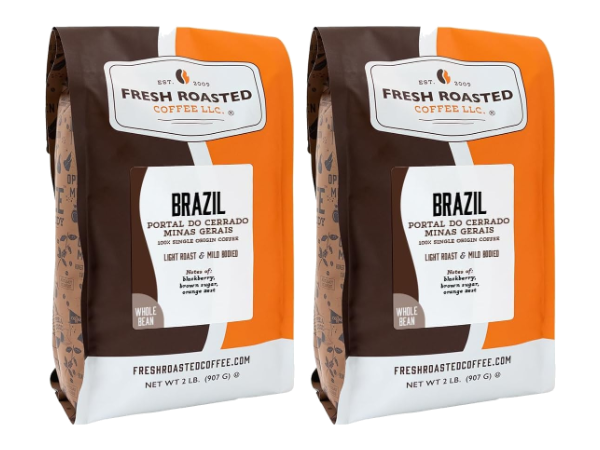
Fresh Roasted Coffee Brazil Minas Gerais
Fresh Roasted Coffee’s Brazil Minas Gerais is a light-roast single-origin coffee from the Cerrado region. Unlike heavier Brazilian roasts, it emphasizes brighter fruit and sweetness, with notes of blackberry, brown sugar, and orange zest.
Key features:
- Origin: Cerrado, Minas Gerais
- Roast: Light
- Bean: 100% Arabica
- Flavor: Blackberry, brown sugar, orange zest
- Varieties: Caturra and Catuai
The roaster specifically recommends it for pour-over and press brewing, while customer feedback also mentions good results when using it for espresso.
What Does Brazilian Coffee Taste Like? Flavor Profiles Explained
A classic Brazilian coffee often tastes sweet, nutty, chocolatey, and full-bodied, with relatively mild acidity. Specialty lots can be much more complex, with citrus, berries, grapes, floral aromas, or stone-fruit notes.
| Flavor Style | Common Notes |
|---|---|
| Classic Brazilian | Chocolate, cocoa, nuts |
| Sweet | Caramel, brown sugar, honey |
| Fruity | Berries, grape, stone fruit |
| Bright | Citrus, orange, tangerine |
| Rich | Dark chocolate, toasted nuts, dried fruit |
Natural processing is particularly common in Brazil and can contribute to sweet, fruitier, fuller-bodied coffees.
Where Is Brazilian Coffee Grown? Major Coffee Regions
Brazil has several important coffee-growing regions, and each can produce noticeably different beans.
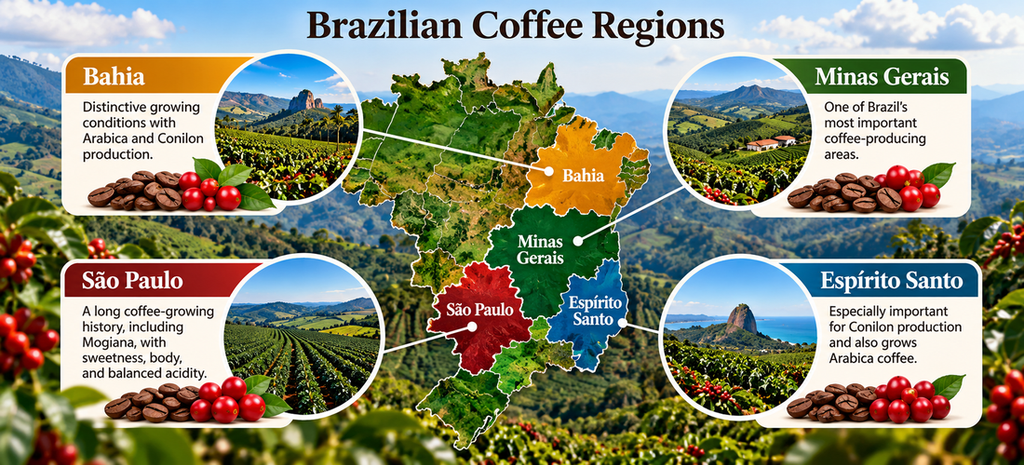
Minas Gerais
Minas Gerais is one of Brazil’s most important coffee-producing areas. It is known for both traditional and specialty coffees, including beans with chocolate, caramel, nutty, and fruity characteristics.
São Paulo
São Paulo has a long coffee-growing history and includes areas such as Mogiana, where specialty coffee production is important. Coffees from the region can offer sweetness, body, and balanced acidity.
Espírito Santo
Espírito Santo is especially important for Brazilian coffee production and is strongly associated with Conilon, a type of Robusta. The region also produces Arabica coffee.
Bahia
Coffee grown in Bahia benefits from distinctive growing conditions and includes both Arabica and Conilon production. Specialty farms in the region can produce clean and complex coffees.
Cerrado Mineiro
Cerrado Mineiro is a well-known specialty coffee region within Minas Gerais. Coffees from the area are often appreciated for sweetness, body, and consistent quality.
Brazilian Coffee Varieties: Bourbon, Catuai, Mundo Novo & More
Brazil grows many Arabica varieties, each with its own characteristics and flavor potential. Bourbon, Catuai, and Mundo Novo are among the varieties commonly found in Brazilian coffee production.
| Variety | General Characteristics |
|---|---|
| Bourbon | Sweet, aromatic, often complex |
| Yellow Bourbon | Fruity, sweet, sometimes citrusy |
| Catuai | Balanced and adaptable |
| Mundo Novo | Full-bodied and productive |
| Catucaí | Sweet, aromatic, varied flavor potential |
| Arara | Sweet, aromatic specialty profiles |
Variety alone does not determine the taste of Brazilian coffee. Elevation, soil, climate, processing, fermentation, and roasting all influence the final cup.
Are Brazilian Coffee Beans Good for Espresso? 5 Reasons to Try Them
Brazilian beans are an excellent choice for espresso, especially if you prefer sweetness, body, and a smoother acidity.
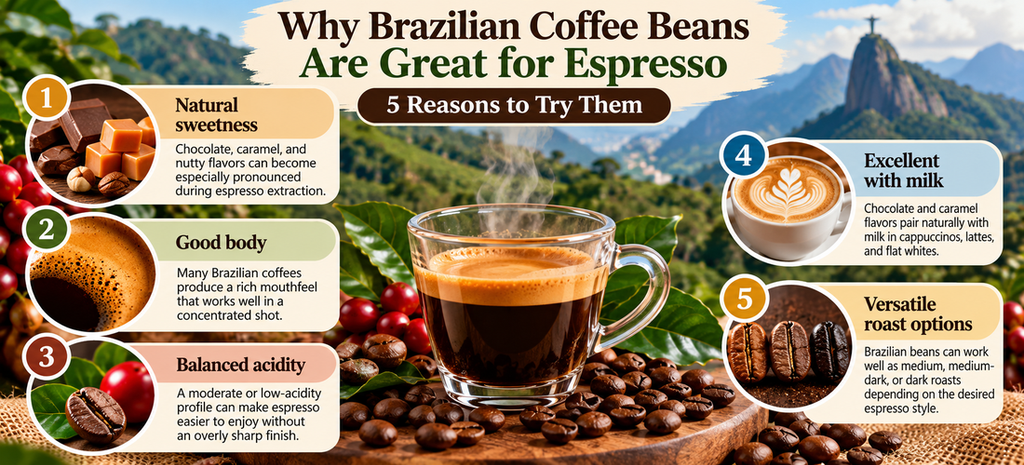
1. Natural sweetness
Chocolate, caramel, and nutty flavors can become especially pronounced during espresso extraction.
2. Good body
Many Brazilian coffees produce a rich mouthfeel that works well in a concentrated shot.
3. Balanced acidity
A moderate or low-acidity profile can make espresso easier to enjoy without an overly sharp finish.
4. Excellent with milk
Chocolate and caramel flavors pair naturally with milk in cappuccinos, lattes, and flat whites.
5. Versatile roast options
Brazilian beans can work well as medium, medium-dark, or dark roasts depending on the desired espresso style.
For a traditional espresso, start with a medium to medium-dark Brazilian roast. For a more fruit-forward espresso, a lighter specialty roast can be worth trying.
Is Brazilian Coffee Strong? Flavor, Caffeine & Strength Explained
Brazilian coffee can taste strong, but strength and caffeine content are not the same thing.
A typical 8-oz (240 ml) cup of brewed coffee may contain roughly 80–120 mg of caffeine, although the actual amount varies according to the beans, dose, grind, brewing method, and serving size.
The word “strong” can describe several different things:
- Flavor strength — how intense the coffee tastes.
- Body — how rich or heavy it feels.
- Roast intensity — how dark the beans were roasted.
- Caffeine content — the actual amount of caffeine in the drink.
Brazilian coffee is often perceived as strong because many popular Brazilian styles have substantial body and pronounced chocolate or roasted flavors.
How to Brew Brazilian Coffee Beans for the Best Flavor
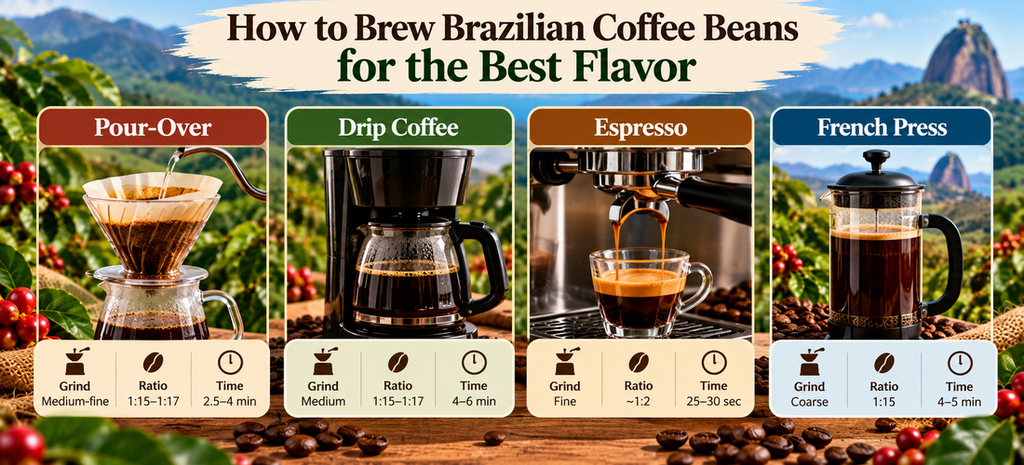
The ideal brewing method depends on the roast and flavor profile. Medium Brazilian beans are particularly versatile, while darker beans can work well for espresso and French press.
| Brewing Method | Grind | Ratio | Time |
|---|---|---|---|
| Pour-Over | Medium-fine | 1:15–1:17 | 2.5–4 min |
| Drip Coffee | Medium | 1:15–1:17 | 4–6 min |
| Espresso | Fine | ~1:2 | 25–30 sec |
| French Press | Coarse | 1:15 | 4–5 min |
These brewing guidelines are a useful starting point, but Brazilian coffee can respond differently depending on the roast, freshness, and processing method.
Pour-Over
Use a medium-fine grind with light or medium Brazilian beans. This method can highlight citrus, fruit, floral aromas, and sweetness.
Drip Coffee
Medium Brazilian beans with chocolate, caramel, and nutty notes are a natural match for drip coffee. It is an easy way to get a balanced everyday cup.
Espresso
Use a fine grind and begin with approximately a 1:2 coffee-to-yield ratio. Medium and medium-dark Brazilian beans can produce a sweet, full-bodied shot with good crema.
French Press
A coarse grind and 4–5 minute steeping time can emphasize the heavier body and chocolate or nutty character of Brazilian coffee.
Brewing tip: If the coffee tastes sour or thin, try a slightly finer grind or longer extraction. If it tastes bitter or dry, go coarser or shorten the extraction time. Freshly roasted and freshly ground beans will also make a noticeable difference.