
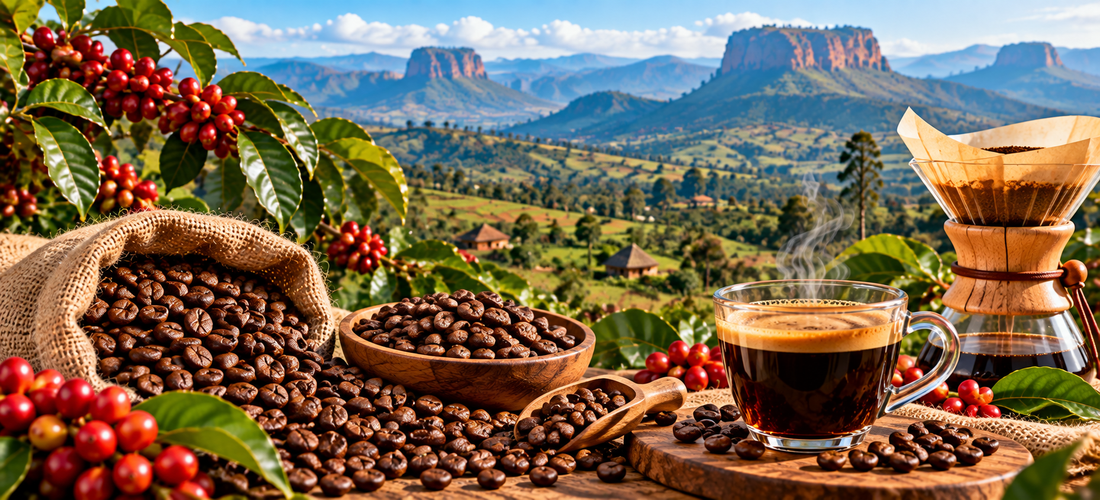
Ethiopian coffee beans are prized for their bright acidity, floral aromas, and fruity flavors. Beans from different regions can offer remarkably different characteristics, making Ethiopia one of the most diverse coffee origins to explore.
What Is Ethiopian Coffee? Origins, History & Key Characteristics
Ethiopian coffee is coffee grown in Ethiopia, widely regarded as one of the birthplaces of Coffea arabica. Coffee has deep cultural roots in the country, including the traditional Ethiopian coffee ceremony.
Common characteristics include:
- Bright acidity: Often noticeable in washed coffees.
- Floral aromas: Jasmine and other delicate floral notes are common.
- Fruit flavors: Blueberry, strawberry, peach, citrus, and tropical fruit can appear.
- Natural sweetness: Notes of honey, sugar, and stone fruit are common.
- Complexity: Many Ethiopian coffees have several distinct flavor layers.
Ethiopian coffee can be processed using both washed and natural methods, creating significantly different tasting experiences.
Best Ethiopian Coffee Beans: Top Picks to Try
The best Ethiopian coffee depends on the flavor profile and brewing method you prefer. Here are several well-known types worth trying:
Fresh Roasted Coffee Ethiopian Yirgacheffe Kochere
Fresh Roasted Coffee Ethiopian Yirgacheffe Kochere is a medium-roast 100% Arabica coffee from the Kochere district of Ethiopia’s famous Yirgacheffe region.
Key features:
- Origin: Kochere, Yirgacheffe, Ethiopia
- Roast: Medium
- Bean type: 100% Arabica
- Process: Fully washed
- Tasting notes: Lemon and honey
The coffee is grown at roughly 5,900–6,550 feet (1,798–1,996 meters) and processed at local washing stations.

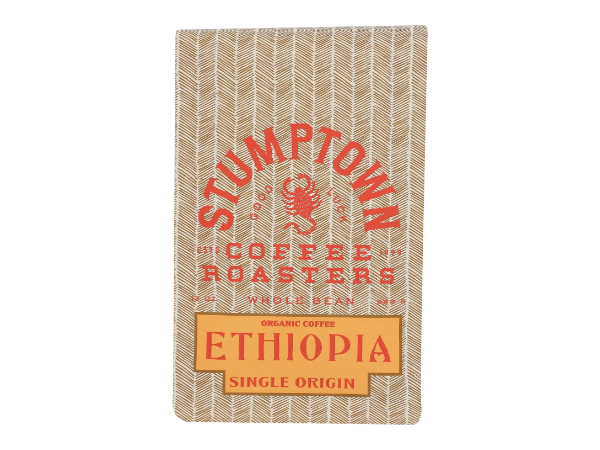
Stumptown Organic Ethiopia Guji Coffee
Stumptown Organic Ethiopia Guji is a single-origin coffee selected from the Guji region, an area known for high-quality specialty coffee.
Key features:
- Origin: Guji, Ethiopia
- Type: Single-origin coffee
- Certification: Organic
- Flavor notes: Lemon-lime, black tea, hops
- Style: Bright and aromatic
Stumptown has also maintained long-term relationships with Ethiopian producers, including farms and washing stations in the Guji highlands.
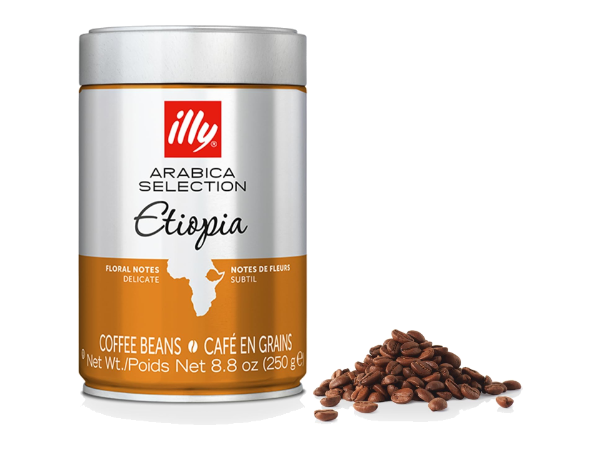
illy Arabica Selection Ethiopia Whole Bean Coffee
illy Arabica Selection Ethiopia is a 100% Arabica whole-bean coffee created to highlight the character of Ethiopian-grown coffee.
Key features:
- Origin: Ethiopia
- Bean type: 100% Arabica
- Format: Whole bean
- Package size: 250 g
- Brewing options: Espresso, moka, filter, and lungo
As part of illy’s Arabica Selection range, the Ethiopian version provides an easy way to explore single-origin characteristics from a major specialty coffee-growing country.
What Does Ethiopian Coffee Taste Like? A Flavor Guide
Ethiopian coffee does not have one single flavor profile. The taste can vary considerably depending on where the beans are grown and how they are processed.
Typical Ethiopian coffee flavors include:
- Blueberry and other berries
- Lemon and bergamot
- Peach and apricot
- Jasmine and floral aromas
- Chocolate and cocoa
- Honey and brown sugar
- Tea-like flavors
Washed Ethiopian coffee often has a cleaner, brighter, and more delicate taste. Natural-process coffee tends to be sweeter and fruitier, sometimes with strong berry flavors.
Where Does Ethiopian Coffee Come From? Major Growing Regions
Ethiopian coffee is grown across several regions, particularly in the country’s highland areas where altitude, climate, and growing conditions support Arabica coffee.
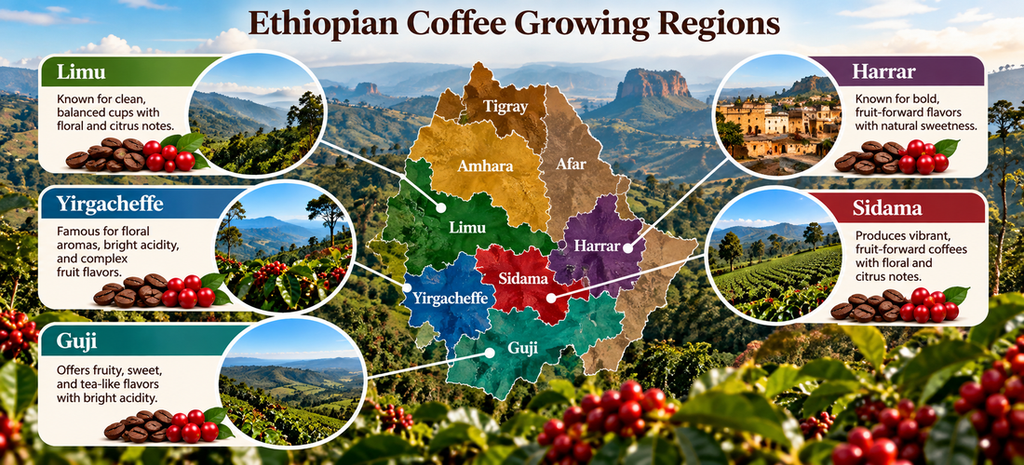
Yirgacheffe
Yirgacheffe is one of Ethiopia’s best-known coffee areas. Coffees from this region are often light-bodied, floral, citrusy, and tea-like.
Sidama
Sidama coffees can offer a combination of citrus, floral, berry, and sweet notes. Both washed and natural coffees are produced here.
Guji
Guji is known for expressive specialty coffees. Depending on processing, beans can show berry, tropical fruit, floral, and sweet characteristics.
Harrar
Harrar is traditionally associated with naturally processed coffees. Its beans can have distinctive blueberry, dried-fruit, wine-like, and chocolate notes.
Limu
Limu coffees are often balanced and aromatic, with citrus, floral, spice, and sweet characteristics.
What Varieties of Coffee Are Grown in Ethiopia?
Ethiopia has an enormous diversity of coffee genetics. Instead of relying on a small number of commercial cultivars, many Ethiopian coffees are described as heirloom varieties or local landraces.
Some recognized Ethiopian selections include:
- 74110
- 74112
- 74148
- Ethiopian heirloom varieties
- Local landrace selections
The exact variety can have a significant influence on the final cup, but region, altitude, processing, and roasting also play major roles.
Is Ethiopian Coffee Good for Espresso? Pros & Brewing Tips
Yes. Ethiopian coffee can make excellent espresso, especially when you enjoy bright and fruity shots.
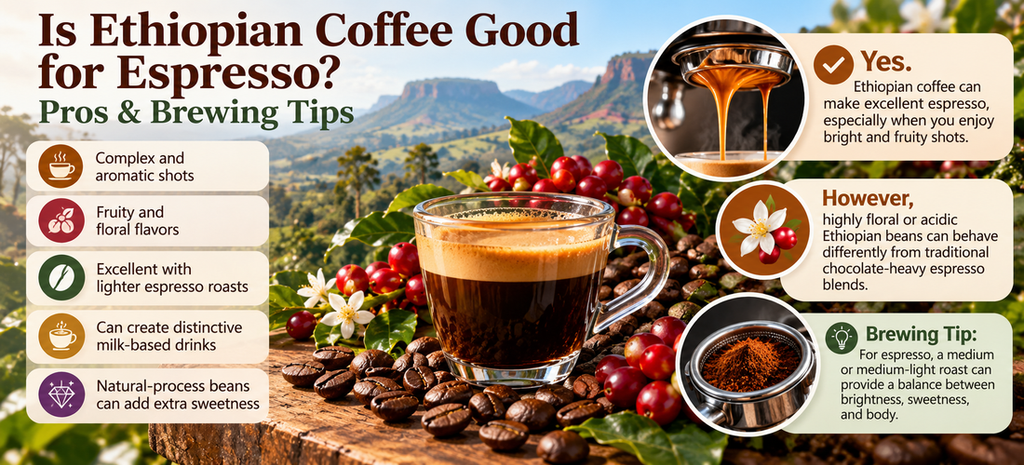
However, highly floral or acidic Ethiopian beans can behave differently from traditional chocolate-heavy espresso blends.
Why try Ethiopian beans for espresso?
- Complex and aromatic shots
- Fruity and floral flavors
- Excellent with lighter espresso roasts
- Can create distinctive milk-based drinks
- Natural-process beans can add extra sweetness
For espresso, a medium or medium-light roast can provide a balance between Ethiopian character and enough body for the shot.
Is Ethiopian Coffee Strong? Caffeine, Acidity & Flavor Explained
Ethiopian coffee is grown across several regions, mainly in the country’s highlands at elevations of roughly 1,500–2,200 meters (4,900–7,200 feet) above sea level.
For a typical 8-oz (240 ml) cup of brewed Ethiopian coffee, you can expect roughly 80–120 mg of caffeine, depending on the beans, roast, grind size, and brewing method.
| Factor | What to Expect |
|---|---|
| Caffeine | Ethiopian brewed coffee, 8 oz – 80–120 mg |
| Acidity | Often medium to high, especially in light roasts |
| Body | Light to medium is common |
| Flavor intensity | Can be very high because of fruity and floral notes |
| Roast level | Light and medium roasts are popular |
So, Ethiopian coffee is not automatically stronger in caffeine than coffee from other origins. Its distinctive acidity and concentrated fruit or floral flavors can simply make it seem more intense.
How to Brew Ethiopian Coffee Beans to Bring Out Their Flavor
The best brewing method depends on the beans and your preferred taste. Pour-over is particularly popular for Ethiopian coffee because it can highlight delicate floral and fruit notes.

1. Choose Fresh Ethiopian Coffee Beans
Choose freshly roasted beans from regions such as Yirgacheffe, Guji, Sidama, or Harrar. Washed coffees usually offer cleaner floral and citrus notes, while natural-process beans tend to be sweeter and fruitier.
2. Select a Brewing Method and Grind the Beans
A pour-over is an excellent choice for highlighting the complex flavors of Ethiopian coffee. Grind the beans just before brewing and start with a medium-fine grind.
If the coffee tastes sour or weak, try a slightly finer grind. If it tastes bitter or dry, go a little coarser.
3. Measure the Coffee and Water
A good starting ratio is 1:16 coffee to water.
For example:
- 20 g coffee
- 320 ml water
You can use more coffee for a stronger cup or increase the water for a lighter brew.
4. Use the Right Water Temperature and Bloom
Heat the water to around 195–205°F (90–96°C). For lighter Ethiopian roasts, the higher end of this range can help extract more flavor.
Start by pouring about 40–60 ml of water over 20 g of coffee and let it bloom for 30–45 seconds.
5. Brew Slowly and Evenly
After blooming, gradually add the remaining water using a gentle circular pour. Aim for a total brewing time of approximately 2½–4 minutes.
Avoid rushing the process, as uneven extraction can make the coffee taste overly sour or bitter.
6. Taste and Adjust Your Recipe
Let the coffee cool for a few minutes before judging the flavor. If it tastes too sharp, try a finer grind or slightly longer extraction. If it tastes bitter or dry, use a coarser grind or shorter extraction.