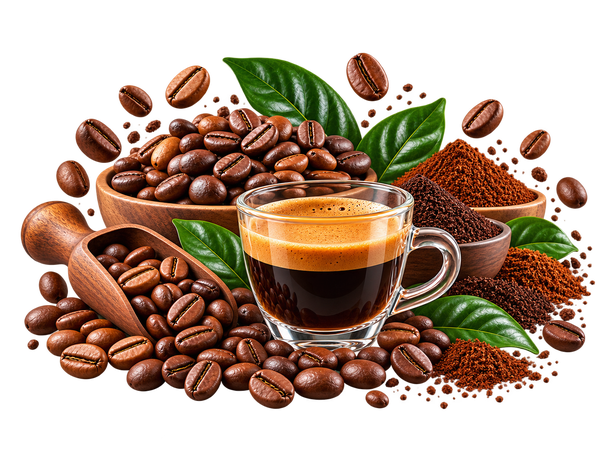
Espresso beans are not a separate species of coffee. In most cases, they are coffee beans selected and roasted with espresso brewing in mind.
Choosing the right espresso beans can make a noticeable difference in the taste, aroma, body, and crema of your coffee.
What Are Espresso Beans?
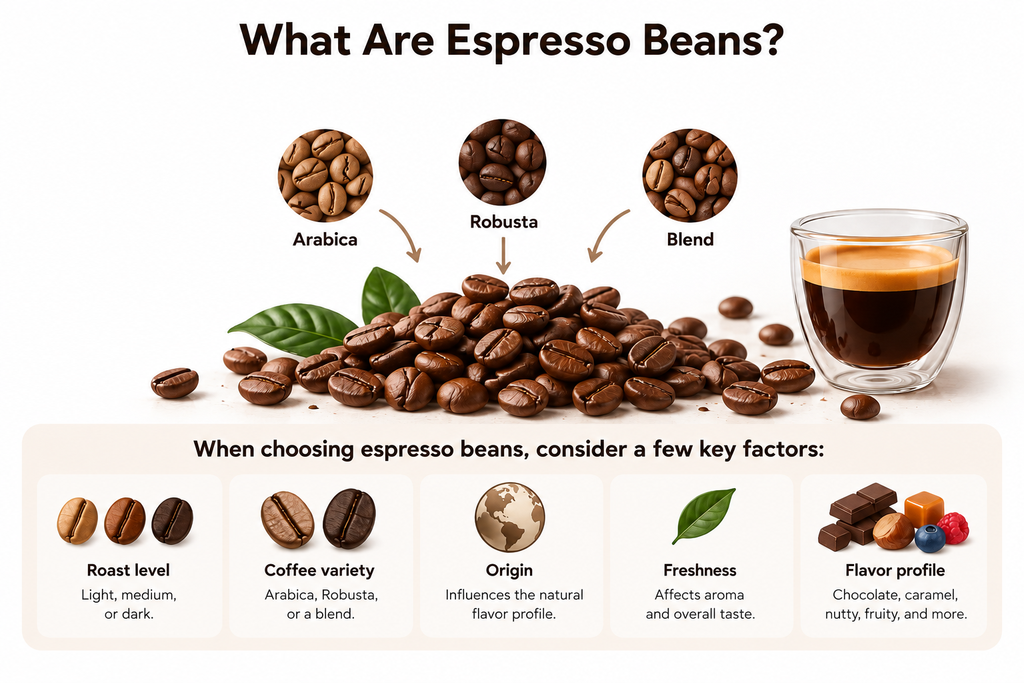
Espresso beans are coffee beans selected and roasted to work well with espresso brewing. They can come from different regions and may be made from Arabica, Robusta, or a blend of both.
When choosing espresso beans, consider a few key factors:
- Roast level — light, medium, or dark
- Coffee variety — Arabica, Robusta, or a blend
- Origin — influences the natural flavor profile
- Freshness — affects aroma and overall taste
- Flavor profile — chocolate, caramel, nutty, fruity, and more
Espresso is a brewing method, not a separate type of coffee bean. Hot water is forced through finely ground coffee under pressure, producing a concentrated shot.
Espresso Beans by Roast Level
Roast level is one of the easiest ways to narrow down your choices. It affects the flavor, acidity, body, and overall character of the finished espresso.
| Roast Level | Typical Flavor | Body | Common Espresso Use |
|---|---|---|---|
| Light Roast | Fruity, floral, bright | Light to medium | Straight espresso, specialty brewing |
| Medium Roast | Balanced, sweet, nutty | Medium | Espresso, Americano, milk drinks |
| Dark Roast | Bold, smoky, bittersweet | Full | Espresso, latte, cappuccino |
These characteristics can vary depending on the coffee origin, processing method, and roasting style.
Light Roast Espresso Beans
Light roast espresso can produce a brighter and more distinctive cup. Depending on the beans, you may notice fruity, floral, citrus, or other delicate flavors.
Light roasts can be less forgiving during espresso brewing because grind size, water temperature, dose, and extraction time can have a noticeable effect on the final result.
Medium Roast Espresso Beans
Medium roast beans offer a balance between acidity, sweetness, body, and roast character. They are a versatile option for home espresso and can work well in both straight espresso and milk-based drinks.
For beginners who are unsure where to start, medium roast espresso beans can be a practical choice because they offer a broad range of flavor profiles without the stronger roast character of many dark roasts.
Dark Roast Espresso Beans
Dark roast espresso beans typically have a fuller body and stronger roasted flavors. Chocolate, caramelized, smoky, and bittersweet notes are common descriptions, although the exact flavor depends on the coffee.
Dark roasts are often used for traditional-style espresso and can stand up well to milk in drinks such as lattes and cappuccinos.
Arabica vs. Robusta for Espresso
Arabica and Robusta are the two main coffee species used commercially, and both can be used for espresso.
Arabica is often associated with greater flavor complexity and a wider range of aromatic characteristics. Robusta generally has a stronger, more intense profile and contains more caffeine by weight than Arabica.
Some espresso blends combine the two to balance flavor, body, crema, and intensity.
| Feature | Arabica | Robusta |
|---|---|---|
| Flavor | Often smoother and more complex | Stronger and more intense |
| Acidity | Usually higher | Usually lower |
| Body | Medium to full | Often fuller |
| Caffeine | Generally lower | Generally higher |
| Espresso use | Single-origin and specialty espresso | Blends and traditional espresso styles |
Neither option is automatically better for every espresso drink. Your choice should depend on the flavor and intensity you prefer.
Espresso Beans for Different Coffee Drinks
The best espresso beans can depend on what you put in the cup after extraction.
Espresso
For straight espresso, you may want beans with enough complexity to remain interesting without milk or other ingredients. Medium and lighter roasts can highlight origin and flavor characteristics, while darker roasts can provide a more traditional, bold profile.
Latte
Milk can soften acidity and bitterness, so beans with chocolate, caramel, nutty, or other pronounced flavors can work particularly well in a latte.
Cappuccino
A cappuccino contains less milk than a latte, so the espresso remains more noticeable. Medium and medium-dark roasts can provide enough body and flavor to balance steamed milk and foam.
Americano
Because an Americano combines espresso with hot water, the espresso itself remains important. A balanced medium roast or a more intense dark roast can both work depending on your taste.
Whole Bean vs. Ground Espresso Coffee
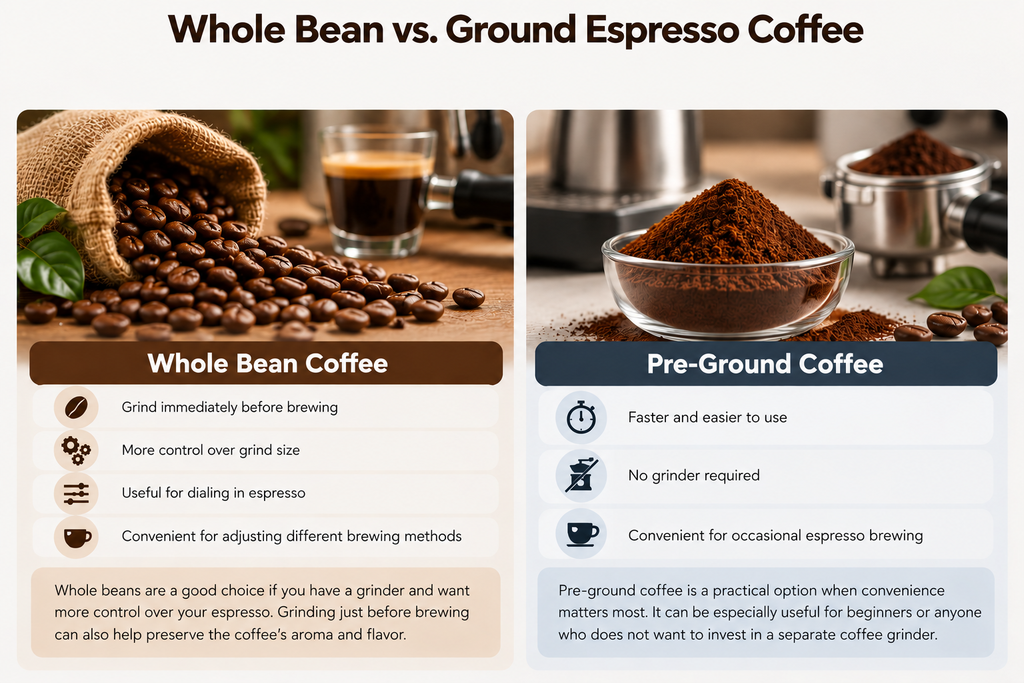
Whole bean coffee gives you more control over the grinding process and allows you to grind the coffee immediately before brewing.
Pre-ground coffee is more convenient, but its flavor can change more quickly after grinding because more of the coffee is exposed to air.
For espresso, grind size is particularly important because espresso requires a fine and consistent grind. If you use whole beans, a quality burr grinder can make it easier to adjust the grind for your espresso machine.
Whole Bean Coffee
Whole bean coffee gives you more control over the grind and allows you to adjust it to your espresso machine and brewing preferences.
Advantages:
- Grind immediately before brewing
- More control over grind size
- Useful for dialing in espresso
- Convenient for adjusting different brewing methods
Whole beans are a good choice if you have a grinder and want more control over your espresso. Grinding just before brewing can also help preserve the coffee’s aroma and flavor.
Pre-Ground Coffee
Pre-ground coffee is designed for convenience and can be a practical choice if you do not have a grinder or make espresso only occasionally.
Advantages:
- Faster and easier to use
- No grinder required
- Convenient for occasional espresso brewing
Pre-ground coffee can simplify the brewing process, although you have less control over the grind size. For regular espresso brewing, whole beans may offer more flexibility.
How Fresh Should Espresso Beans Be?
Freshness matters because coffee changes after roasting. Beans gradually lose some of their aromatic compounds and carbon dioxide over time.
For espresso, extremely fresh coffee is not always ideal either. Newly roasted beans can contain a large amount of carbon dioxide, which may make extraction more difficult.
Instead of focusing only on a specific number of days, check the roast date, store the beans properly, and pay attention to how they perform during brewing.
How to Store Espresso Beans
Proper storage can help preserve the flavor of your coffee.
Keep espresso beans:
- In an airtight container or well-sealed original bag.
- Away from direct sunlight.
- Away from heat and excessive moisture.
- At a stable room temperature.
- In a convenient location where the container can remain tightly closed.
Buying smaller quantities can also make sense if you do not use coffee quickly.
Espresso Beans for Beginners
If you are buying espresso beans for the first time, you do not need to start with the most expensive coffee available.
A good starting point is a medium or medium-dark roast with a flavor profile you already enjoy. If you prefer sweeter and more balanced coffee, look for descriptions that mention chocolate, caramel, nuts, or brown sugar. If you prefer brighter flavors, consider lighter roasts with fruit or citrus notes.
Once you become familiar with your espresso machine and grinder, you can experiment with different origins, roast levels, blends, and Arabica-Robusta combinations.