

Latte and cappuccino are two of the most popular espresso-based coffee drinks. Both combine espresso with steamed milk, but they differ in milk-to-coffee ratio, foam, texture, and overall flavor.
What Are Latte and Cappuccino?
A latte is an espresso drink made with a relatively large amount of steamed milk and a thin layer of foam. The result is smooth, creamy, and usually milder in coffee flavor.
A cappuccino uses espresso, steamed milk, and a more noticeable layer of milk foam. Because it contains less milk than a latte, the espresso flavor can come through more clearly.
| Feature | Latte | Cappuccino |
|---|---|---|
| Base | Espresso | Espresso |
| Milk | More steamed milk | Less steamed milk |
| Foam | Thin layer | Thicker foam |
| Texture | Smooth and creamy | Airy and foamy |
| Coffee flavor | Milder | More pronounced |
The exact preparation can vary by coffee shop, country, and recipe, so these differences are best viewed as general characteristics rather than strict rules.
Best Coffee Beans for Latte, Cappuccino & Other Milk Drinks
Milk can soften acidity and reduce some of the sharper characteristics of coffee. For this reason, many people prefer beans with a full body and flavors that remain noticeable after milk is added.
Good characteristics to look for include:
- Medium to dark roasts for a richer coffee profile
- Chocolate and caramel notes for a naturally sweet combination
- Nutty flavors that work well with creamy milk
- Full body to keep the espresso noticeable
- Freshly roasted beans for better aroma and flavor
For more specific recommendations, explore our guides:
- Best Coffee Beans for Latte
- Best Espresso Beans for Latte
- Best Coffee Beans for Cappuccino
- Best Espresso Beans for Cappuccino
- Best Beans for Flat White
- Best Beans for Iced Latte
- Best Beans for Mocha
These guides explore each coffee style in more detail, including bean selection, roast preferences, flavor profiles, and brewing considerations.
How to Choose Coffee Beans for Milk-Based Coffee
Choosing beans for a latte or cappuccino is slightly different from choosing coffee for black coffee. Milk changes how the coffee tastes, so a delicate coffee can become less noticeable.
1. Consider the Roast
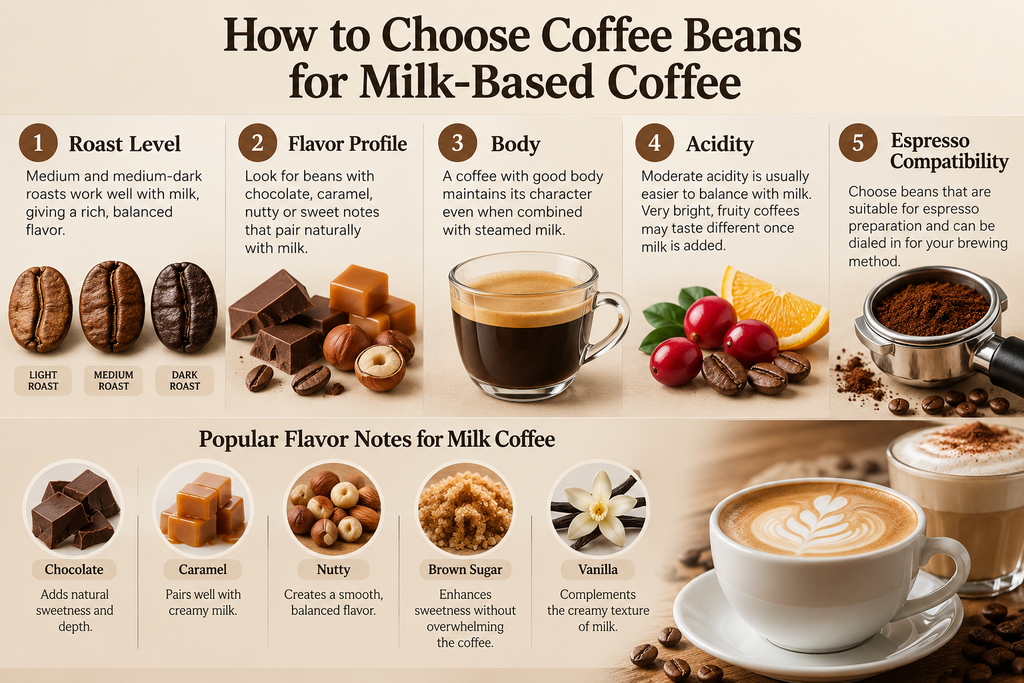
Medium and medium-dark roasts are versatile choices for espresso drinks. Darker roasts can provide a stronger, deeper flavor, while medium roasts may offer more noticeable sweetness and acidity.
2. Look for Complementary Flavors
Chocolate, caramel, toasted nuts, brown sugar, and similar flavors often pair naturally with milk.
3. Pay Attention to Body
A coffee with good body can maintain its character when combined with steamed milk.
4. Consider the Acidity
Bright, fruity coffees can work in milk drinks, but their character may change significantly when milk is added. If you prefer a classic latte or cappuccino profile, a balanced coffee with moderate acidity may be easier to work with.
5. Choose Beans Suitable for Espresso
If you are preparing your drink with an espresso machine, look for beans that are recommended or commonly used for espresso preparation. The label does not necessarily need to say “espresso roast,” however.
Latte vs. Cappuccino: What’s the Difference?
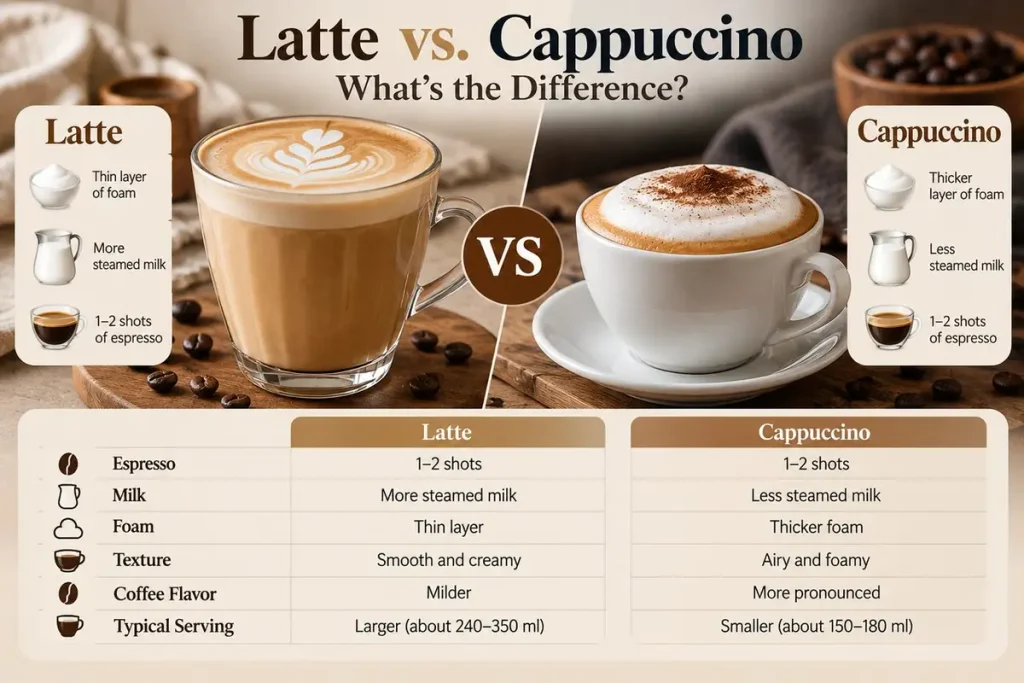
The biggest difference is the balance between espresso, steamed milk, and foam.
A latte generally has more steamed milk and a thinner foam layer, giving it a softer and creamier texture. A cappuccino has a stronger emphasis on foam and usually a more concentrated coffee character.
Your choice can simply come down to texture and flavor preference:
- Choose a latte if you prefer a creamy, milk-forward drink.
- Choose a cappuccino if you prefer more foam and a more noticeable espresso character.
You can also compare these drinks with other espresso favorites:
- Latte vs. Flat White
- Cappuccino vs. Flat White
- Espresso vs. Latte
- Espresso vs. Cappuccino
These comparisons look at the differences in milk, foam, espresso intensity, serving size, and overall taste. They can help you understand how each drink is prepared and choose a style that fits your preferred coffee experience.
How to Make Latte, Cappuccino & Other Milk Coffee Drinks
A basic latte or cappuccino starts with a well-prepared espresso shot and properly textured milk.
Basic Latte
- Brew one or two shots of espresso.
- Steam milk until smooth and creamy.
- Pour the milk slowly into the espresso.
- Finish with a thin layer of foam.
Basic Cappuccino
- Prepare one or two shots of espresso.
- Steam the milk while creating more foam.
- Pour the steamed milk over the espresso.
- Spoon or pour the thicker foam on top.
The milk should be integrated rather than simply poured on top. Proper steaming creates a smoother texture and helps balance the espresso.
For more detailed recipes:
- How to Make a Latte
- How to Make a Cappuccino
- How to Make an Iced Latte
- How to Make a Flat White
These recipes cover the basic techniques behind popular milk-based espresso drinks, from preparing the espresso to steaming and combining the milk.
What Milk Is Best for Latte & Cappuccino?
Whole milk is a traditional choice because its fat and protein content can produce a creamy texture and stable foam. However, plant-based alternatives can also work well.
| Milk | General Character | Best For |
|---|---|---|
| Whole milk | Creamy and rich | Classic latte and cappuccino |
| Oat milk | Creamy, slightly sweet | Latte and iced latte |
| Soy milk | Balanced and relatively creamy | Latte and cappuccino |
| Almond milk | Lighter with nutty flavor | Flavored lattes |
| Barista-style plant milk | Designed for steaming | Espresso drinks |
The best option ultimately depends on the flavor and texture you want in the finished drink.