
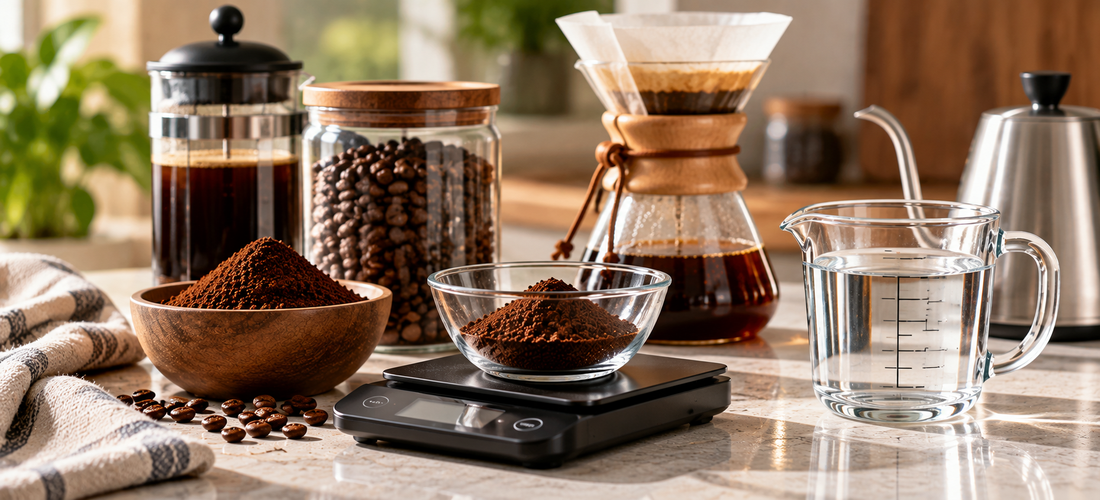
The right coffee-to-water ratio can make a noticeable difference in your daily brew. Too much water may leave coffee tasting weak, while too much coffee can produce a stronger cup than you prefer.
What Is the Coffee-to-Water Ratio?
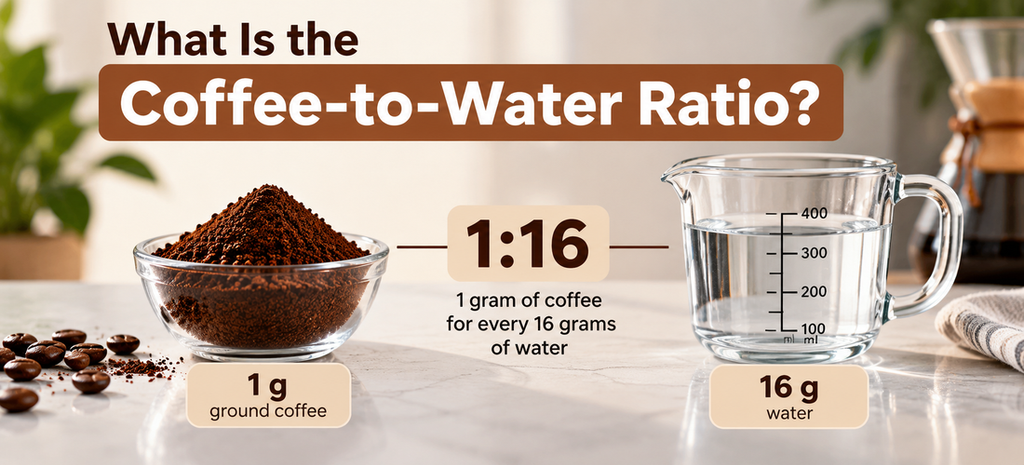
The coffee-to-water ratio describes how much ground coffee you use in relation to the amount of water. It is usually written as a ratio such as 1:15 or 1:16.
For example, a 1:16 ratio means using 1 gram of coffee for every 16 grams of water. With 20 grams of coffee, you would need 320 grams of water.
A small change in this ratio can affect the strength and balance of your drink. Starting with a standard proportion makes it easier to adjust the recipe to your taste.
What Is the Best Coffee-to-Water Ratio for a Perfect Cup?
For most everyday filter coffee, a ratio between 1:15 and 1:17 is a useful starting point. The best choice depends on your beans, brewing method, and preferred taste.
- 1:15: A fuller, more concentrated cup.
- 1:16: A balanced starting point for everyday coffee.
- 1:17: A lighter cup with a milder taste.
These ratios are guidelines rather than strict rules. Try 1:16 first, then adjust the amount of coffee slightly until you find the flavor you enjoy.
Coffee-to-Water Ratio Chart: Grams, Cups, and Tablespoons
Use this chart to calculate the amount of water for different coffee doses. The table assumes a starting ratio of 1:16 and an approximate measurement of 5 grams of ground coffee per level tablespoon.
| Ground Coffee | Water | Approx. Tablespoons |
|---|---|---|
| 10 g | 160 ml | 2 |
| 15 g | 240 ml | 3 |
| 20 g | 320 ml | 4 |
| 25 g | 400 ml | 5 |
| 30 g | 480 ml | 6 |
| 40 g | 640 ml | 8 |
Tablespoon measurements are approximate because coffee density and grind size vary. A digital kitchen scale provides more consistent results than measuring by volume.
How Much Coffee and Water Do You Need for 1–4 Cups?
For this chart, one cup means 8 fluid ounces (about 240 ml). Some coffee makers use smaller cup markings, so check your machine’s instructions before measuring.
| Cups of Coffee | Water | Ground Coffee (1:16) |
|---|---|---|
| 1 cup | 240 ml | 15 g |
| 2 cups | 480 ml | 30 g |
| 3 cups | 720 ml | 45 g |
| 4 cups | 960 ml | 60 g |
These amounts provide a practical starting point for drip coffee. If the finished brew tastes too strong or too mild, adjust the coffee dose while keeping the water amount consistent.
Coffee-to-Water Ratios for Different Brewing Methods
Each brewing method works a little differently. Use these ratios as starting points, then follow your recipe or equipment instructions when they call for something specific.
| Brewing Method | Suggested Starting Ratio | Notes |
|---|---|---|
| Drip coffee | 1:15–1:17 | Balanced everyday brew |
| Pour-over | 1:15–1:17 | Adjust for flow and taste |
| French press | 1:15 | Full-bodied coffee |
| AeroPress | 1:12–1:17 | Depends on the recipe |
| Cold brew concentrate | 1:5–1:8 | Usually diluted before serving |
Espresso uses a different measurement: the weight of the dry coffee dose compared with the weight of the liquid espresso. A common starting point is 1:2, such as 18 grams of ground coffee yielding 36 grams of espresso.
How to Measure Coffee and Water for Consistent Results
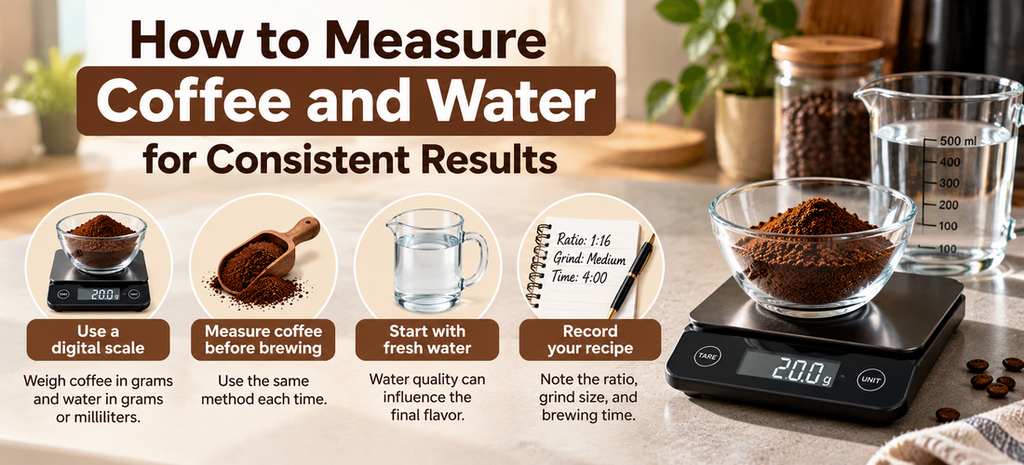
Accurate measurements help you repeat a recipe when you find a flavor you like. You do not need complicated equipment to get started.
Follow these simple tips:
- Use a digital scale: Weigh coffee in grams and water in grams or milliliters.
- Measure coffee before brewing: Use the same method each time.
- Start with fresh water: Water quality can influence the final flavor.
- Record your recipe: Note the ratio, grind size, and brewing time.
Measuring by weight also makes it easier to compare beans and brewing methods without relying on uneven spoonfuls.
How to Adjust Your Coffee Ratio for a Stronger or Milder Brew
If your coffee does not taste quite right, make small changes instead of changing several variables at once.
- For stronger coffee: Try increasing the coffee dose while keeping the water amount the same.
- For milder coffee: Reduce the coffee dose slightly.
- For a more balanced flavor: Start at 1:16 and test small adjustments, such as 1:15 or 1:17.
Keep in mind that strength and extraction are not the same. A brew can taste concentrated yet still be under-extracted or over-extracted. If coffee tastes sour, bitter, or harsh, grind size and brewing time may also need attention.
Does Coffee Grind Size Affect the Ideal Coffee-to-Water Ratio?
Grind size affects how quickly water extracts flavor from coffee grounds. Finer grounds generally extract more quickly, while coarser grounds take longer under similar brewing conditions.
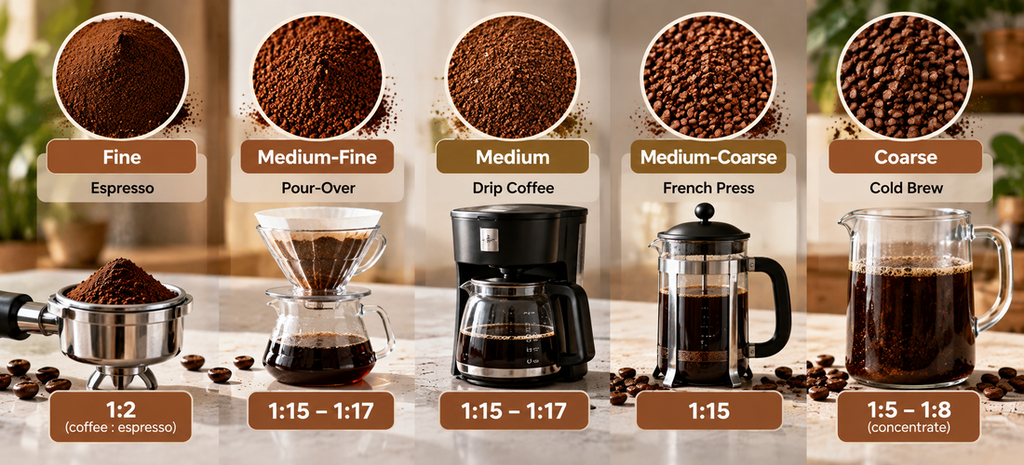
Use a grind suited to your brewing method: medium for many drip machines, medium-coarse for French press, and a finer grind for espresso. If coffee tastes unbalanced, check the grind and brewing time before making a large change to the ratio.
Common Coffee-to-Water Ratio Mistakes and How to Avoid Them
Even a good coffee-to-water ratio can produce disappointing results when measurements or brewing conditions are inconsistent.
Avoid these common mistakes:
- Using the wrong cup size: Coffee maker markings may not equal a standard 8-ounce cup.
- Relying only on tablespoons: Spoon measurements can vary with grind size and how loosely the coffee is packed.
- Changing too many variables at once: Adjust the ratio, grind, or brewing time one at a time.
- Using one ratio for every method: Espresso, cold brew, and filter coffee have different brewing requirements.
The best coffee-to-water ratio is the one that consistently produces a cup you enjoy. Start with a reliable measurement, make small adjustments, and keep track of what works for your beans and brewing equipment.