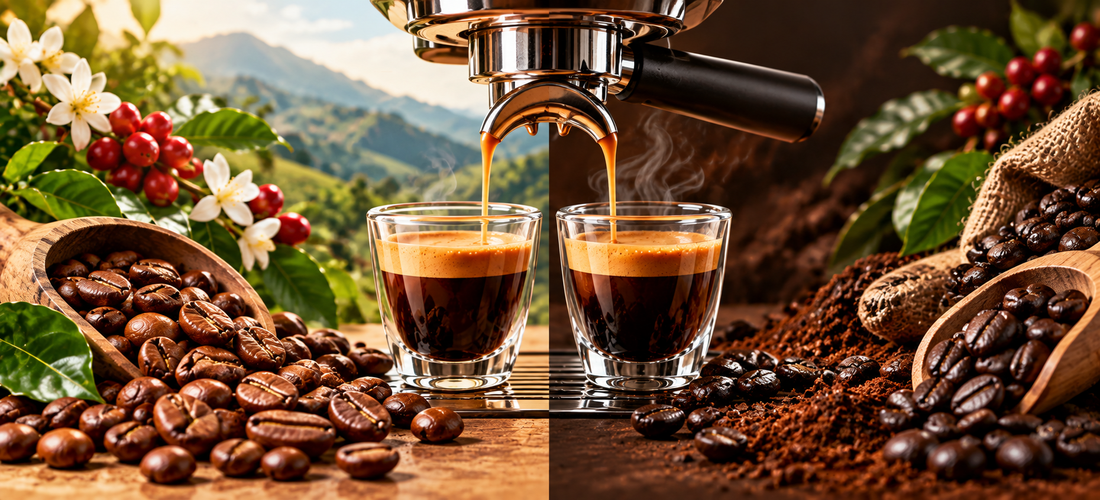
Arabica and Robusta are the two most common coffee species used in espresso. They can produce very different results in the cup, especially in flavor, caffeine, body, and crema.
What Are Arabica and Robusta Coffee Beans?
Arabica (Coffea arabica) is known for its smooth taste, aromatic character, and greater flavor complexity. It is often associated with sweet, fruity, floral, or chocolate notes.
| Feature | Arabica | Robusta |
|---|---|---|
| Flavor | Smooth, sweet, complex | Strong, bitter, earthy |
| Acidity | Usually higher | Usually lower |
| Body | Light to medium | Full and heavy |
| Caffeine | Lower | Higher |
| Crema | Good | Often thicker |
| Best for | Balanced espresso | Strong, bold espresso |
Robusta (Coffea canephora) has a stronger and more intense profile. It typically offers a heavier body, more bitterness, earthy flavors, and higher caffeine content.
How Arabica and Robusta Differ in Taste and Aroma
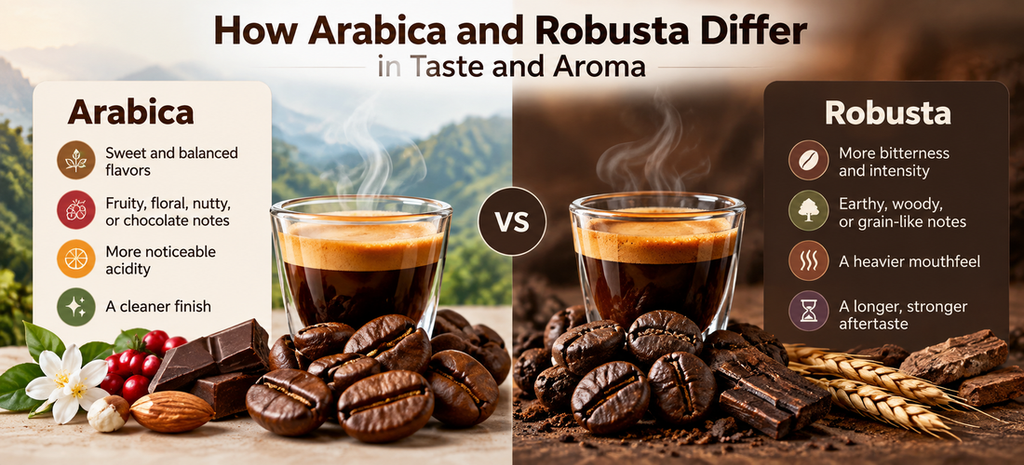
The biggest difference becomes obvious when you taste Arabica and Robusta as espresso. The two beans can create noticeably different cups, even when they are prepared with the same espresso machine and brewing method.
Arabica usually produces:
- Sweet and balanced flavors
- Fruity, floral, nutty, or chocolate notes
- More noticeable acidity
- A cleaner finish
Robusta tends to deliver:
- More bitterness and intensity
- Earthy, woody, or grain-like notes
- A heavier mouthfeel
- A longer, stronger aftertaste
For many specialty coffee drinkers, Arabica is easier to enjoy on its own. Robusta, however, can be useful when espresso needs extra body and punch.
Best Arabica Coffee Beans for Espresso
For Arabica espresso, look for beans that are roasted specifically for espresso or medium to dark roast beans that balance sweetness with body.
Lavazza Espresso Whole Bean Coffee
The blend offers an aromatic profile, a rich body, and floral and fruity notes. Compared with darker espresso blends, it provides a lighter, more aromatic direction for an iced latte.
Key features:
- Roast level: Light, according to Lavazza’s US product page
- Bean type: 100% Arabica
- Coffee origins: Central and South America
- Flavor notes: Floral and fruity
- Intensity: 5/10
- Best for: Aromatic iced lattes with a lighter flavor profile
This coffee is worth trying if you enjoy a latte with more delicate flavors instead of pronounced dark-roast bitterness.

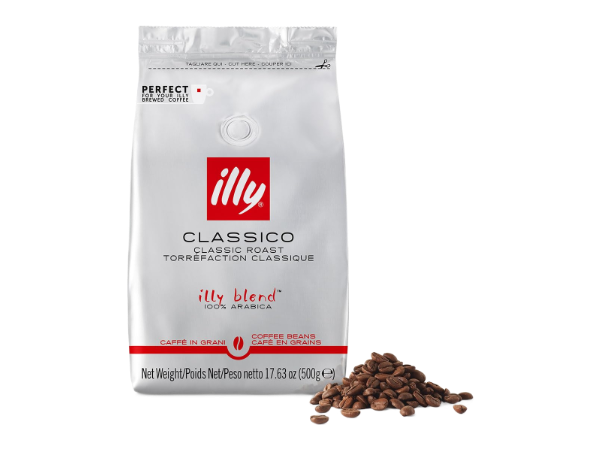
illy Classico Whole Bean Coffee
illy Classico is a medium-roast coffee made from a blend of 100% Arabica beans. It has a smooth, velvety character with delicate notes of caramel, orange blossom, and jasmine, followed by a sweet finish.
Key features:
- Roast level: Medium
- Bean type: 100% Arabica
- Flavor notes: Caramel, orange blossom, and jasmine
- Flavor profile: Smooth, aromatic, and sweet
- Flavor intensity: 5/9
- Best for: Balanced iced lattes and versatile home brewing
illy Classico is a good option if you prefer a refined coffee flavor without an overly bitter finish.
Best Robusta Coffee Beans for Espresso
Robusta works well when the goal is a powerful and traditional espresso profile. Its naturally strong character can add more body, bitterness, and intensity to the shot, while also helping create a thick layer of crema.
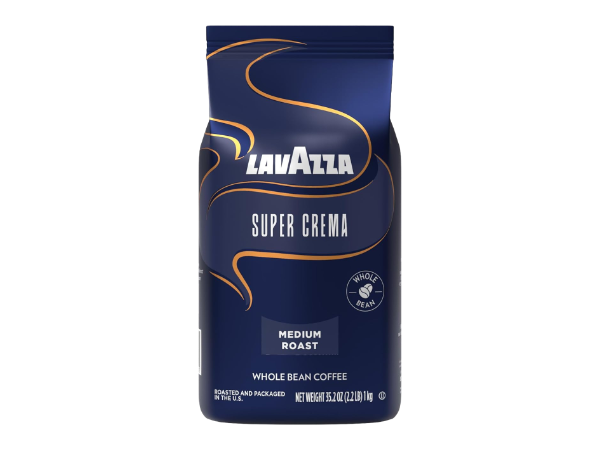
Lavazza Super Crema Whole Bean Coffee
This blend combines Arabica and Robusta beans to create a full-bodied coffee with a smooth, creamy character.
Key features:
- Roast level: Medium
- Bean type: Arabica and Robusta
- Flavor notes: Roasted hazelnut and brown sugar
- Flavor profile: Full-bodied and nutty
- Recommended brewing method: Espresso machine
- Best for: Creamy iced lattes and everyday espresso drinks
Super Crema’s nutty sweetness makes it suitable for both unsweetened drinks and recipes with a little vanilla syrup.
Lavazza Qualità Rossa
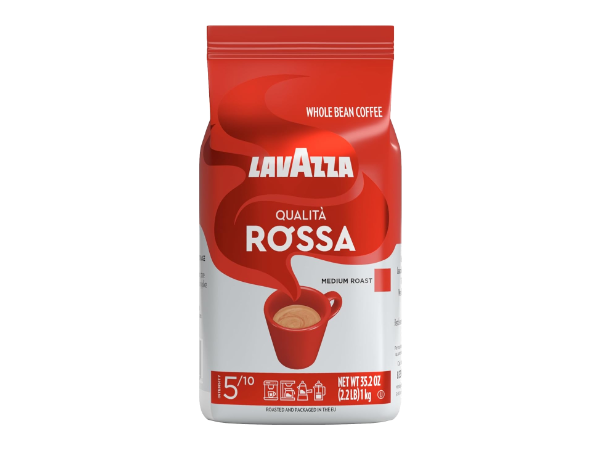
Lavazza Qualità Rossa is a classic Arabica and Robusta blend with a rounded flavor profile. Lavazza describes the coffee as full-bodied and balanced, with soft chocolate and dried-fruit characteristics.
Key features:
- Roast: Medium
- Bean blend: Arabica and Robusta
- Flavor notes: Chocolate and dried fruit
- Body: Full and rounded
- Aroma: Rich and pronounced
- Best for: Everyday cappuccinos
Qualità Rossa is a good choice for drinkers who want a familiar Italian-style coffee flavor. Its chocolate character also pairs naturally with the sweetness of steamed milk.
Which Coffee Makes Better Espresso Crema?
When it comes to espresso crema, Robusta usually has the advantage. Robusta beans tend to produce a thicker, denser, and longer-lasting crema because of their higher natural oil and soluble compound content.
Arabica can also produce a beautiful crema, especially when the beans are fresh and properly extracted.
| Bean | Espresso Crema | Typical Result |
|---|---|---|
| Arabica | Good | Lighter, finer crema |
| Robusta | Excellent | Thicker, denser crema |
| Arabica + Robusta | Excellent | Balanced flavor with rich crema |
For the thickest and most persistent crema, Robusta is usually the better choice. For a combination of rich crema and smoother flavor, an Arabica-Robusta blend can offer the best of both.
Arabica vs. Robusta: Which Has More Caffeine?
Robusta generally contains more caffeine than Arabica. Green Arabica beans contain about 0.9–1.4% caffeine, while Robusta contains around 1.5–2.6%. In other words, Robusta can have roughly 1.5–2 times more caffeine than Arabica.
| Coffee | Typical caffeine in green beans | Relative caffeine |
|---|---|---|
| Arabica | 0.9–1.4% | Lower |
| Robusta | 1.5–2.6% | Higher |
| Robusta vs. Arabica | — | About 1.5–2× more |
For espresso, this means a Robusta-based coffee will usually provide more caffeine than 100% Arabica. The final amount still depends on the coffee dose and extraction method.
What Does This Mean for Espresso?
If caffeine is one of your main priorities, Robusta is usually the better choice. Pure Robusta or an espresso blend with a significant Robusta percentage can provide a stronger caffeine profile than a 100% Arabica coffee.
For a smoother espresso with more emphasis on aroma and flavor complexity, Arabica is usually preferred. For more caffeine, heavier body, and a stronger taste, Robusta has the edge.
Which Bean Is Better for Espresso Machines?
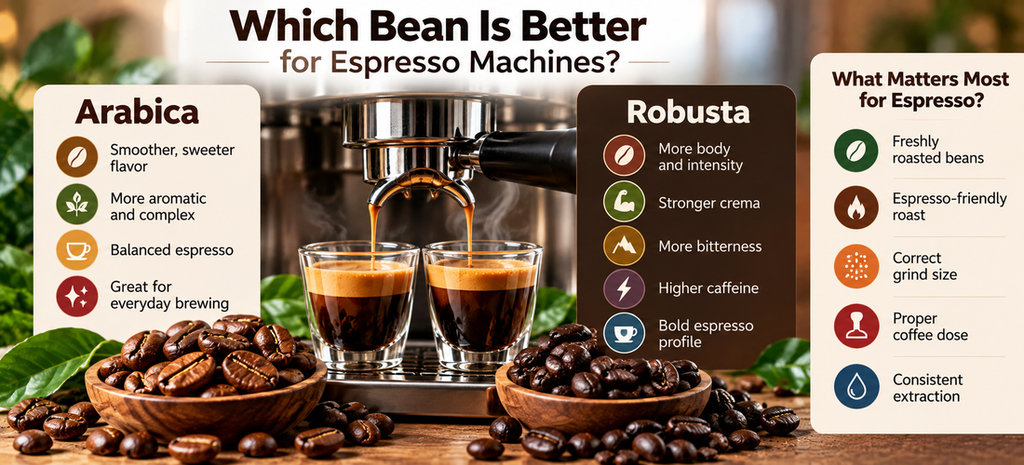
Both Arabica and Robusta work well in espresso machines, so the best choice depends on the type of espresso you prefer. Arabica produces a smoother, sweeter, and more aromatic shot, while Robusta delivers more body, intensity, and crema.
The most important factors are:
- Freshly roasted beans
- Espresso-friendly roast
- Correct grind size
- Proper coffee dose
- Consistent extraction
Arabica is a great option for espresso machines when you want a smoother and more aromatic shot. Robusta is useful when you want more body, intensity, and crema.
Is Arabica or Robusta Better for a Strong Espresso?
For a strong, bold espresso, Robusta usually has the advantage. It contains about 1.5–2.6% caffeine, compared with 0.9–1.4% in Arabica, and typically produces a heavier body, more bitterness, and a more intense finish.
Arabica can also make a strong espresso, particularly with a darker roast and a well-balanced extraction, but it is generally sweeter and more aromatic rather than intensely bitter.
Choose Robusta for: more caffeine, body, bitterness, and intensity.
Choose Arabica for: sweetness, aroma, complexity, and smoother flavor.
Can You Blend Arabica and Robusta for Espresso?
Yes. Blending Arabica and Robusta is a popular way to create espresso with more body and crema without losing too much sweetness and aroma. Arabica adds flavor complexity, while Robusta contributes intensity, caffeine, and a fuller mouthfeel.
A blend can offer:
- Arabica – sweetness, aroma, and smoother flavor
- Robusta – more body, bitterness, caffeine, and crema
- Balanced espresso – a combination of strength and flavor
A 70/30 or 80/20 Arabica-to-Robusta blend is a good starting point for home espresso. Higher Robusta ratios create a bolder, more intense shot, while a higher Arabica percentage keeps the espresso smoother and more aromatic.