A great latte starts with the coffee, not just the milk. Baristas usually choose beans with enough flavor, body, and intensity to remain noticeable after espresso is combined with steamed milk.
What Makes a Coffee Bean Good for a Latte?
Coffee for a latte needs to work well with a large amount of milk. Delicate beans can easily lose their character, while overly bitter coffee may make the drink taste harsh.
Baristas generally look for beans with:
- Good body — creates a fuller espresso base.
- Balanced acidity — prevents the latte from tasting sharp.
- Strong aroma — helps the coffee remain noticeable through the milk.
- Chocolate, nutty, caramel, or sweet notes — naturally complement steamed milk.
- Good espresso performance — produces a concentrated shot with enough intensity.
The right beans also make it easier to achieve a balanced result when following a latte recipe, especially when the espresso needs to stand out against steamed milk.
7 Best Coffee Beans for a Barista-Style Latte
The best coffee beans for a latte are not necessarily the darkest or strongest ones. Baristas usually look for coffee that can produce a rich, concentrated espresso while still bringing sweetness and character after steamed milk is added.
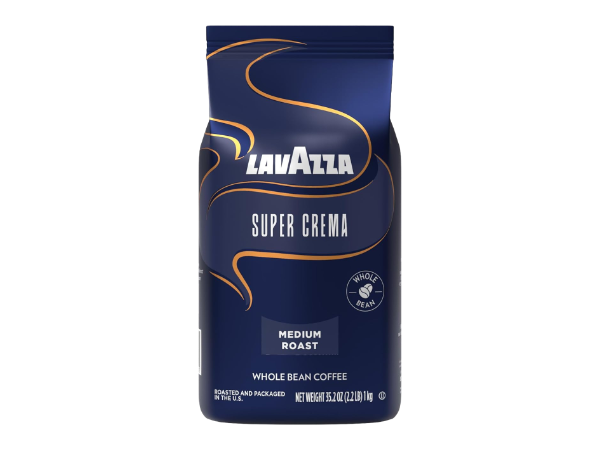
Lavazza Super Crema
Lavazza Super Crema is a medium-roast espresso blend made from Arabica and Robusta beans. It has a full-bodied profile with roasted hazelnut and brown sugar notes, making it a natural match for creamy milk-based drinks.
- Roast: Medium
- Bean blend: Arabica and Robusta
- Body: Medium and full-bodied
- Flavor notes: Roasted hazelnut and brown sugar
- Best use: Espresso, latte, and other milk-based drinks
The combination of nutty sweetness and body helps Super Crema remain noticeable after steamed milk is added.
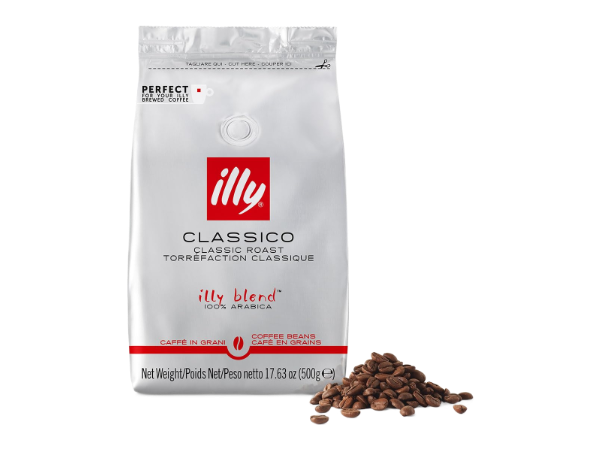
illy Classico Whole Bean
illy Classico is a medium-roast blend made from 100% Arabica beans. Its smooth and velvety profile combines caramel with delicate floral notes, creating a softer alternative to darker espresso blends.
- Roast: Medium
- Bean type: 100% Arabica
- Flavor notes: Caramel, orange blossom, jasmine
- Finish: Sweet
- Brewing: Suitable for espresso and other brewing methods
The gentle sweetness of Classico works well when you want the milk to remain an important part of the latte.
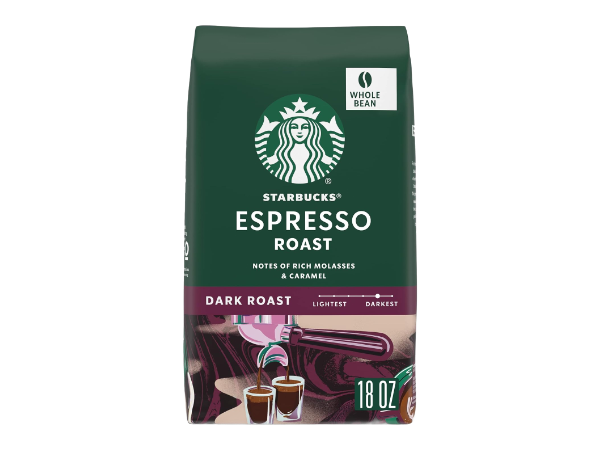
Starbucks Espresso Roast Whole Bean
Starbucks Espresso Roast is a dark, multi-region blend that has been used as the foundation for the company’s espresso drinks since 1975. Its rich molasses and caramel character is specifically designed to work well in drinks served with milk.
- Roast: Dark
- Blend: Multi-region
- Flavor notes: Rich molasses and caramel
- Body: Fuller and robust
- Best use: Espresso, latte, mocha, and other espresso drinks
The caramel-like sweetness can complement steamed milk, while the darker roast provides the intensity needed for a milk-heavy drink.
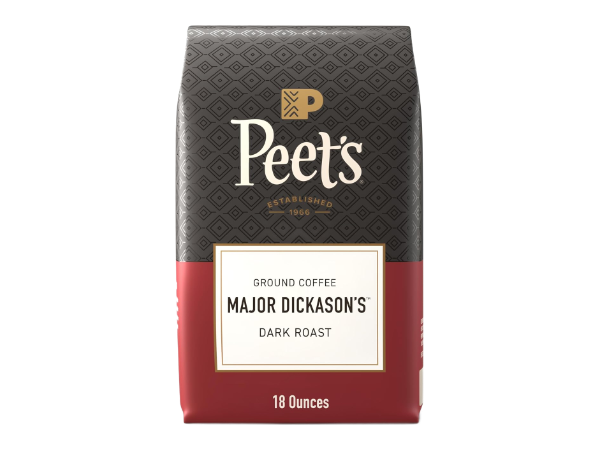
Peet’s Major Dickason’s Blend
Peet’s Major Dickason’s Blend is a dark-roast signature blend made with coffees from Latin America and the Indo-Pacific region. The brand describes it as a bold blend with earthy and spicy characteristics.
- Roast: Dark
- Blend: Latin American and Indo-Pacific coffees
- Profile: Bold and intense
- Flavor character: Earthy and spicy
- Available preparation: Whole bean and espresso
Its deeper roasted profile makes it suitable for drinkers who want a powerful coffee base underneath steamed milk.
Lavazza Espresso Barista Gran Crema
Lavazza Espresso Barista Gran Crema is an Arabica and Robusta blend developed for espresso. It has a full-bodied character, lingering crema, and aromatic notes described by Lavazza as baked biscotti, honey, and roasted cereal.
- Bean blend: Arabica and Robusta
- Intensity: 7/10
- Body: Full-bodied
- Flavor notes: Baked biscotti, honey, roasted cereal
- Preparation: Designed for espresso
The combination of body and lingering crema makes this blend well suited to milk-based espresso drinks.

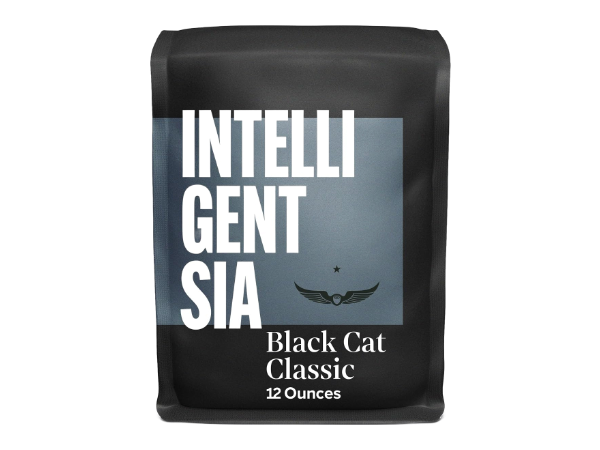
Intelligentsia Black Cat Classic Espresso
Unlike very dark traditional espresso blends, it emphasizes sweetness and vivid fruit acidity, with notes of cherry, cola, and orange.
- Type: Espresso blend
- Roast profile: Lightest espresso in the Black Cat range
- Flavor notes: Cherry, cola, orange
- Acidity: Vivid and noticeable
- Style: Sweet and balanced
This coffee offers a different approach to a latte. Instead of emphasizing dark chocolate or roasted flavors, it can give the drink a brighter and more complex character.
Stumptown Hair Bender
Its profile brings together dark chocolate, citrus, and raisin, while the company describes it as a balanced, complex blend that performs particularly well as espresso.
- Type: Espresso blend
- Origins: Latin America, Indonesia, and East Africa
- Flavor notes: Citrus, dark chocolate, raisin
- Body: Full-bodied espresso
- Espresso performance: Sweet shot with balanced acidity and crema
Hair Bender is especially interesting for a latte because it combines the familiar richness of dark chocolate with brighter citrus and fruit characteristics.

Which Roast Level Works Best for Latte?
Medium and medium-dark roasts are often the easiest starting point for latte brewing. They offer enough flavor and body to remain noticeable through steamed milk while maintaining a good balance of sweetness and acidity.
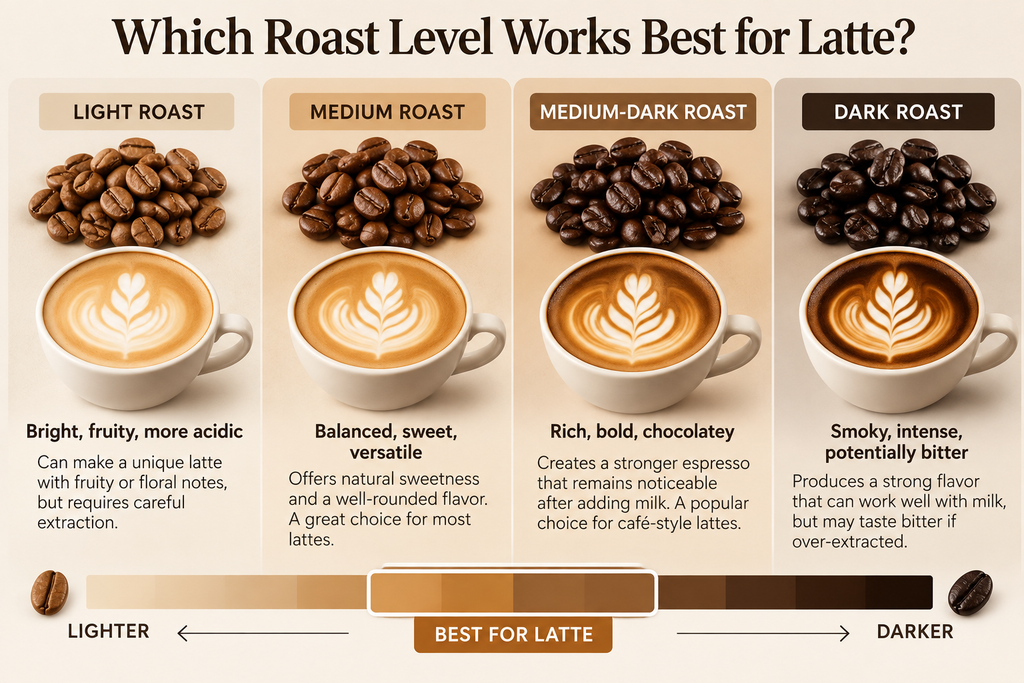
A light roast can still make an excellent latte, especially if you enjoy fruity or floral flavors. However, it usually requires more attention to espresso extraction.
Which Flavor Notes Pair Well With Steamed Milk?
Some coffee flavors naturally blend with the sweetness and creaminess of milk.
Chocolate and cocoa are classic choices because they create a rich, dessert-like profile. Caramel and brown sugar add sweetness, while nutty flavors can make the latte taste rounder and smoother.
Good flavor combinations include:
- Chocolate + caramel
- Cocoa + hazelnut
- Brown sugar + almond
- Toffee + chocolate
- Vanilla + nutty notes
- Mild fruit + milk chocolate
Fruity and floral coffees can also work, but they create a more distinctive latte rather than the traditional café-style flavor.
How Important Is Coffee Body in a Latte?
A coffee with medium to full body usually provides a stronger foundation for steamed milk. This is one reason Brazilian and some Central American coffees are popular for espresso blends.
A full-bodied coffee doesn’t necessarily need to be dark roasted. Bean variety, processing method, origin, roast development, and extraction all influence the final texture and weight of the coffee.
Espresso Blends vs. Single-Origin Beans
Espresso blends are often created to provide consistency, body, sweetness, and balanced extraction. They are a practical choice when you want a traditional latte with chocolate and nutty flavors.
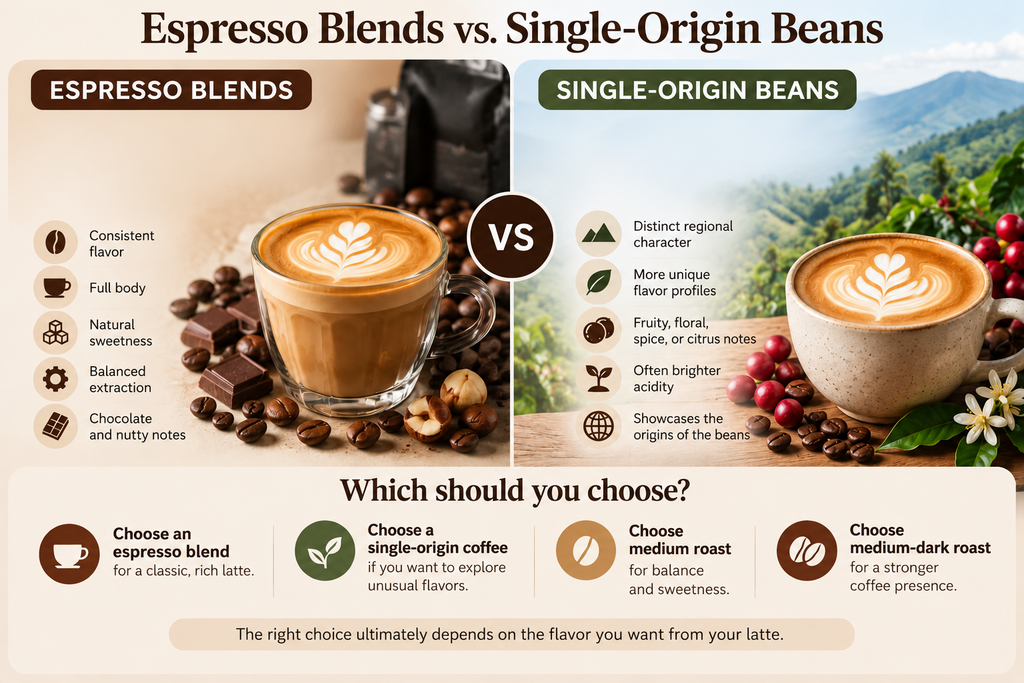
Single-origin beans highlight the characteristics of a particular growing region. They can produce more distinctive flavors, including fruit, floral, spice, or citrus notes.
Which should you choose?
- Choose an espresso blend for a classic, rich latte.
- Choose a single-origin coffee if you want to explore unusual flavors.
- Choose medium roast for balance and sweetness.
- Choose medium-dark roast for a stronger coffee presence.
The right choice ultimately depends on the flavor you want from your latte. Blends are often easier for achieving a consistent, rich espresso base, while single-origin beans offer more room to explore distinctive flavors.
How Baristas Match Coffee With Milk?
Baristas don’t simply add milk to any espresso. They consider how the coffee’s flavor and structure will interact with the milk.
A useful approach is to match intensity:
Bold coffee → more milk-friendly flavors
Chocolate, caramel, nuts, cocoa
Balanced coffee → versatile latte
Brown sugar, milk chocolate, mild fruit
Bright coffee → more distinctive latte
Berries, citrus, floral notes
The milk should soften the espresso without completely hiding it. When the coffee has enough sweetness, body, and intensity, the result is a latte that tastes creamy while still clearly tasting like coffee.