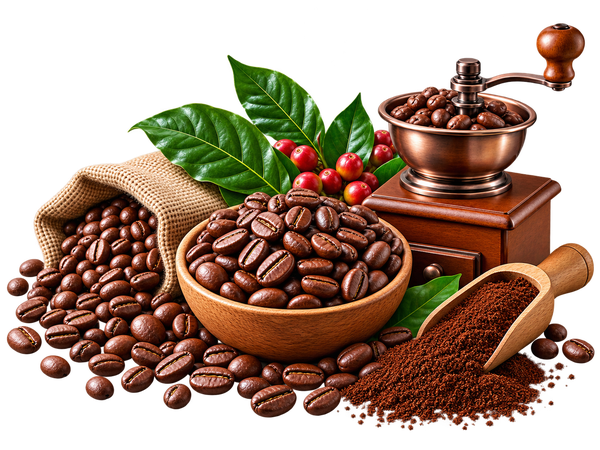
Whole bean coffee gives you more control over how your coffee is prepared, from the grind size to the final flavor in the cup. You can choose beans by roast, origin, flavor profile, and brewing method, then grind them just before brewing for a fresher cup.
What Is Whole Bean Coffee?
Whole bean coffee is roasted coffee that has not been ground. Instead of using pre-ground coffee, you grind the beans shortly before brewing.
Key benefits of whole bean coffee:
- Freshness: Grind the beans just before brewing to preserve more aroma.
- Grind control: Choose the grind size for espresso, drip coffee, French press, or cold brew.
- Better flexibility: Use the same beans with different brewing methods.
- Flavor control: Adjust the grind to change extraction and taste.
- Aroma: Whole beans retain their aroma better before grinding.
Tip: Whole bean coffee is especially useful if you brew coffee in different ways because you can adjust the grind for each method.
For more options, see our Best Coffee Beans guide.
Whole Bean Coffee vs Ground Coffee
The biggest difference is when the coffee is ground. Whole bean coffee stays intact until you are ready to brew, while ground coffee is already milled and ready to use.

Whole bean coffee is particularly useful if you use several brewing methods. The same bag of beans can be ground fine for espresso or much coarser for a French press.
Best Whole Bean Coffee to Try
Looking for whole bean coffee to try? The right choice depends on your preferred roast, flavor profile, and brewing method. Below are some popular options to consider, from everyday medium roasts to bold espresso beans.
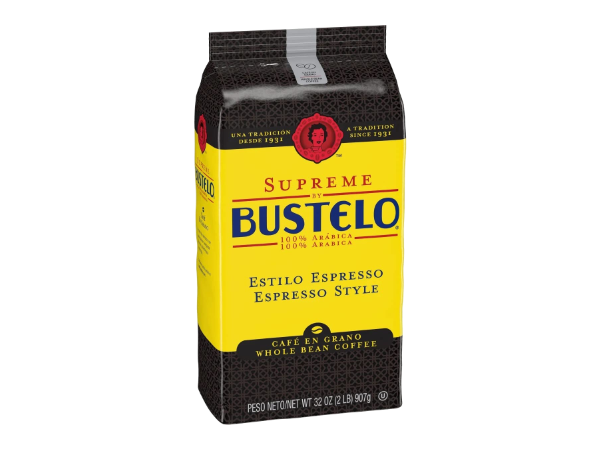
For espresso:
Medium-dark and dark roast beans are popular for espresso, especially with chocolate, cocoa, caramel, or nutty flavor notes.
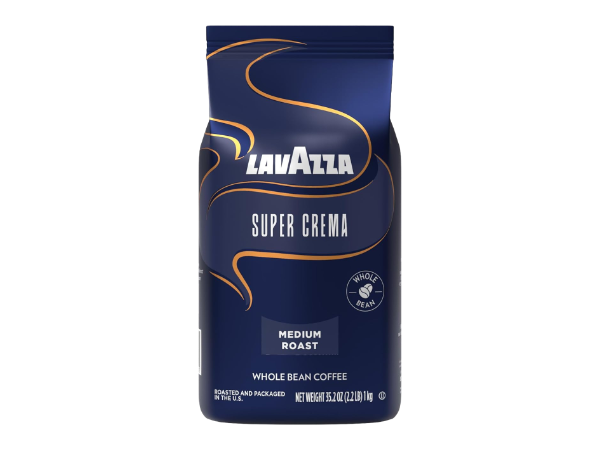
For everyday drip coffee:
Medium roast whole beans are a versatile option for drip coffee and other everyday brewing methods. Look for balanced flavors such as chocolate, caramel, nuts, or mild fruit.

For fruity coffee:
Light roast single-origin beans can be a good choice if you prefer brighter coffee with berry, citrus, floral, or stone-fruit notes.
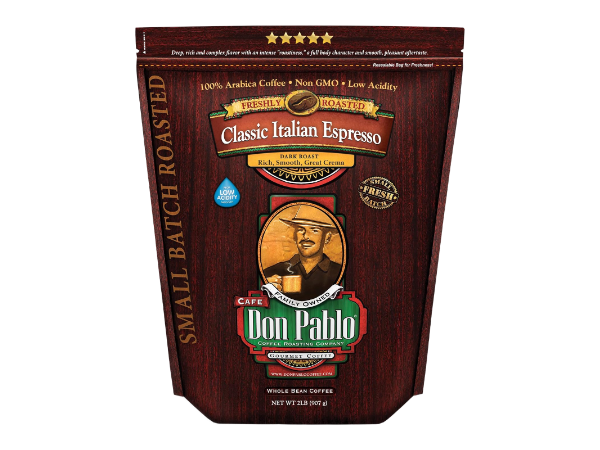
For French press:
Medium and dark roast beans can produce a rich, full-bodied French press with chocolate, nutty, or roasted flavors.
For cold brew:
Medium-dark beans with chocolate, caramel, cocoa, or nutty notes work well as a starting point for smooth, rich cold brew.

Best Whole Bean Coffee by Roast
Roast level has a major effect on the flavor and character of coffee. The three most common categories are light, medium, and dark roast.
Light Roast
Light roast beans usually have a brighter, more noticeable acidity and can show more of the characteristics associated with their origin.
Common flavor notes include:
- Citrus
- Berries
- Floral flavors
- Stone fruit
- Tea-like sweetness
Light roast whole beans are a good option for pour-over and other brewing methods where you want to explore delicate flavors.
Medium Roast
Medium roast is a versatile choice with a balance between acidity, sweetness, body, and roast character.
You may find notes such as:
- Chocolate
- Caramel
- Nuts
- Brown sugar
- Fruit
Medium roast whole beans work well for drip coffee, pour-over, and many automatic coffee makers.
Dark Roast
Dark roast beans have a stronger roast character and typically offer a fuller, heavier profile.
Typical notes include:
- Dark chocolate
- Cocoa
- Toasted nuts
- Molasses
- Smoky or roasted flavors
Dark roast is also a popular choice for espresso, especially for drinkers who prefer a bold traditional-style cup.
Best Whole Bean Coffee by Brewing Method
There is no single whole bean that is perfect for every brewing method. Your choice should match both the roast and the type of flavor you want.
| Brewing Method | Suggested Roast | Grind |
|---|---|---|
| Espresso | Medium–Dark | Fine |
| Drip Coffee | Light–Medium | Medium |
| French Press | Medium–Dark | Coarse |
| Cold Brew | Medium–Dark | Coarse–Extra Coarse |
The grind size is just as important as the roast. A fine grind works well for espresso, while coarser grounds are better suited to French press and cold brew.
How to Grind Whole Coffee Beans
There is no single whole bean that is perfect for every brewing method. The best choice depends on how you prepare your coffee, how strong you like it, and which flavors you want to bring out.
| Brewing Method | Starting Grind |
|---|---|
| Espresso | Fine |
| Drip | Medium |
| Pour-over | Medium-fine |
| French Press | Coarse |
| Cold Brew | Coarse to extra-coarse |
These are starting points rather than fixed rules. Grinder settings are not standardized between brands, so adjust the grind based on the taste and brewing behavior of your coffee.
A simple rule is:
Too slow or bitter → try a slightly coarser grind.
Too fast or weak/sour → try a slightly finer grind.
A burr grinder is especially useful because it gives you more consistent particle size.
How to Store Whole Bean Coffee
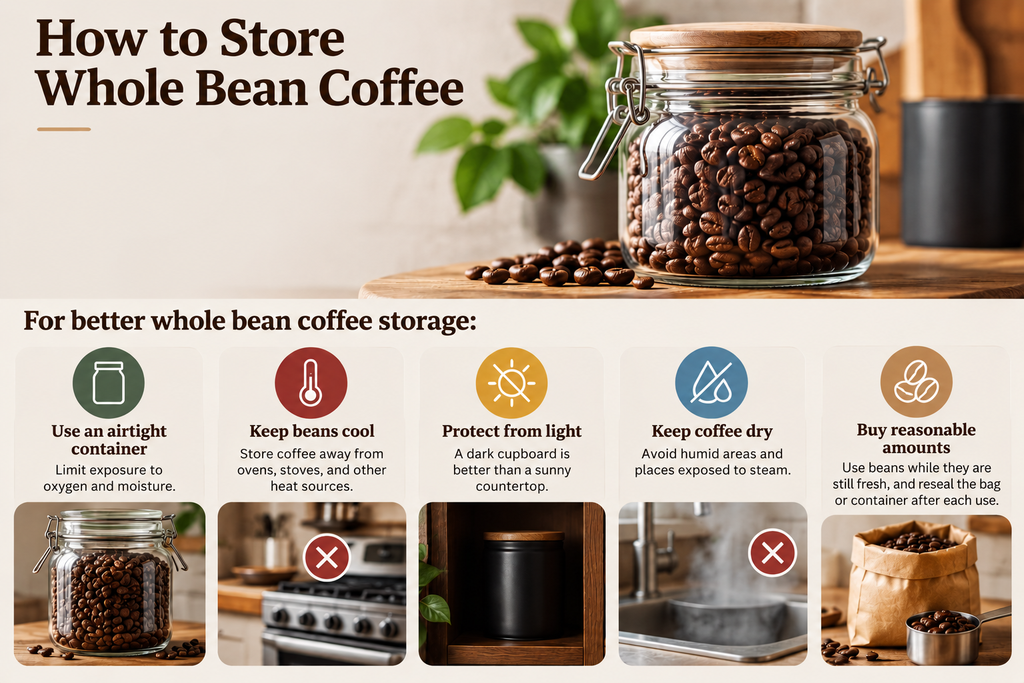
Good storage protects coffee from the factors that speed up staling. Once coffee is roasted, exposure to oxygen, moisture, heat, and light can gradually affect its aroma and flavor. Proper storage can help your beans maintain their quality for longer.
For better whole bean coffee storage:
- Use an airtight container: Limit exposure to oxygen and moisture.
- Keep beans cool: Store coffee away from ovens, stoves, and other heat sources.
- Protect from light: A dark cupboard is better than a sunny countertop.
- Keep coffee dry: Avoid humid areas and places exposed to steam.
- Buy reasonable amounts: Use beans while they are still fresh, and reseal the bag or container after each use.
Oxygen is particularly important because it contributes to the loss of aroma and the development of stale flavors. The Specialty Coffee Association identifies oxygen, temperature, and moisture as important factors in coffee staling.
How Much Whole Bean Coffee Should You Use?
The amount depends on the brewing method and your preferred strength.
A useful starting point is around 1–2 tablespoons of whole beans per 6 ounces of water, but weighing the beans gives you more consistent results.
For repeatable brewing, use a coffee scale and adjust the amount according to taste.
For example:
| Coffee | Starting Amount |
|---|---|
| 6 oz cup | 10–12 g |
| 8 oz cup | 13–16 g |
| 12 oz cup | 20–24 g |
These amounts are starting points rather than strict requirements. Your grinder, brewing method, roast, and personal preference can all change the ideal dose.