Fresh coffee beans can make a noticeable difference in the taste and aroma of your coffee. However, even high-quality beans can lose their character when they are exposed to air, heat, moisture, or light.
Why Coffee Bean Storage Matters
Coffee beans are sensitive to their surroundings. Once roasted, they slowly react with oxygen and gradually lose some of their aroma and flavor.
The main factors that affect coffee freshness are:
- Air: speeds up oxidation and flavor loss.
- Moisture: can affect the beans and their flavor.
- Heat: accelerates the aging process.
- Light: can contribute to flavor deterioration.
- Frequent exposure: opening the container repeatedly introduces fresh air.
Proper storage is especially important after opening a coffee package. Each time the beans are exposed to air, some of their aroma can gradually fade.
How to Store Coffee Beans at Home
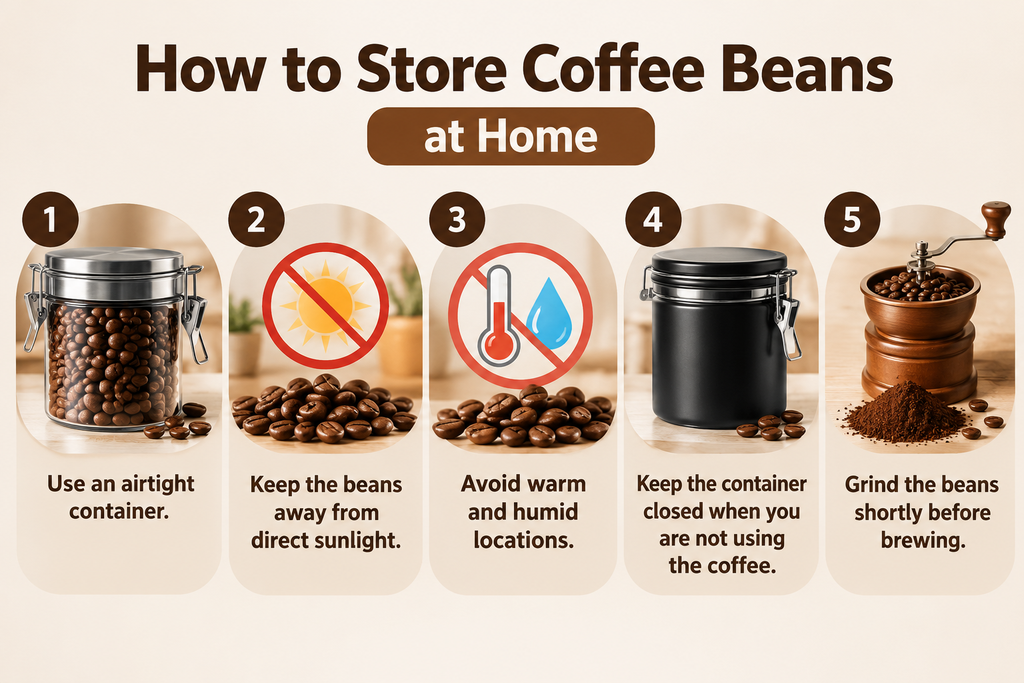
The best way to store coffee beans is to keep them in an airtight container in a cool and dark place.
A kitchen cabinet or pantry is usually a practical choice. Keep the container away from appliances that produce heat, such as ovens, stovetops, and coffee machines.
When possible, buy an amount of coffee that you can use within a few weeks rather than storing a large quantity for months.
Simple Coffee Storage Rules
Keeping coffee beans fresh does not require complicated equipment or special techniques. A few simple habits can help protect their aroma and flavor during everyday storage.
- Use an airtight container.
- Keep the beans away from direct sunlight.
- Avoid warm and humid locations.
- Keep the container closed when you are not using the coffee.
- Grind the beans shortly before brewing.
These small steps can make a noticeable difference in the quality of your coffee. The less the beans are exposed to air, heat, moisture, and light, the longer they can retain their original aroma and flavor.
What Is the Best Container for Coffee Beans?

Fellow Atmos Electric Vacuum Coffee Canister
- 1.2 L capacity — holds up to 16 oz of coffee.
- Electric vacuum seal — removes air to help preserve freshness.
- Whole bean storage — designed for everyday coffee storage.

Airscape by Planetary Design Coffee Storage
- 2.2 lb capacity — ideal for larger coffee bags.
- Plunger lid — pushes excess air away from the beans.
- Light-blocking design — helps protect coffee from light.
An airtight coffee canister is one of the simplest options for home storage. It helps reduce the amount of air that reaches the beans between uses.
Look for a container that:
- closes securely;
- protects the beans from light;
- is clean and completely dry;
- is large enough without leaving excessive empty space.
Opaque containers are particularly useful because they also protect coffee from light.
| Container | Suitable for Coffee Beans? | Main Benefit |
|---|---|---|
| Airtight coffee canister | Yes | Limits air exposure |
| Original sealed coffee bag | Yes | Convenient for short-term storage |
| Open glass jar | No | Too much air and light |
| Plastic food container | Sometimes | Works if it seals tightly |
| Paper bag | Not ideal | Offers little protection |
For everyday use, an airtight coffee canister is a practical choice. It keeps the beans protected while making them easy to access whenever you are ready to brew.
Can You Keep Coffee Beans in the Original Bag?
Yes, especially if the coffee comes in a high-quality resealable bag with a one-way valve.
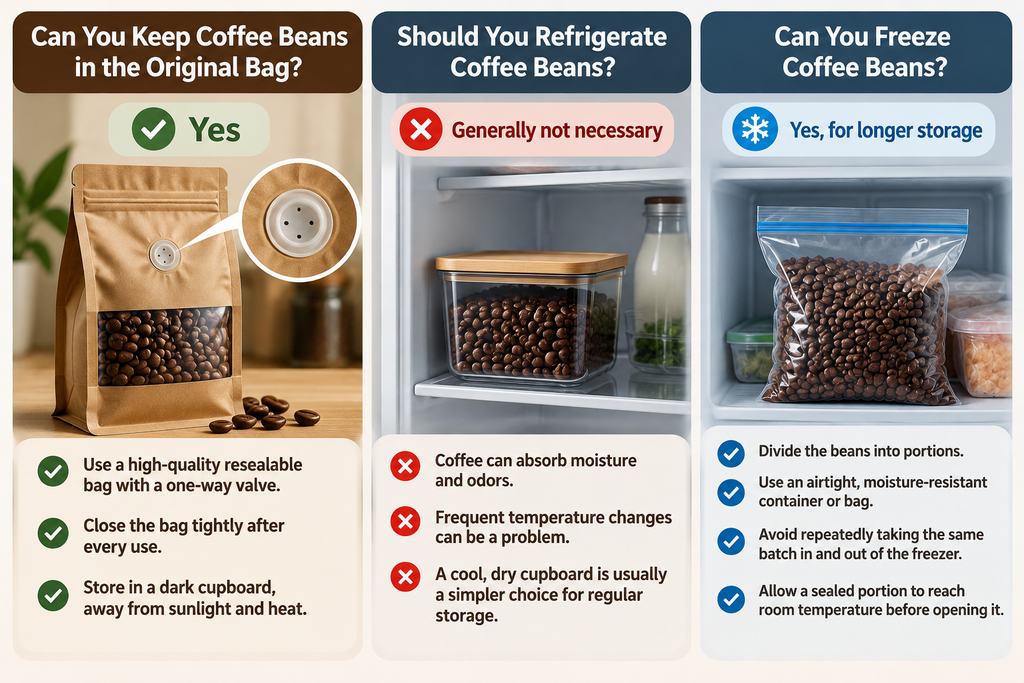
If you use the original package, close it tightly after every use and keep it in a dark cupboard. Avoid leaving the opened bag on the kitchen counter where it may be exposed to sunlight and heat.
For longer storage, transferring the beans to a suitable airtight container can be more convenient.
Should You Refrigerate Coffee Beans?
For everyday coffee storage, the refrigerator is generally not necessary. Coffee can absorb moisture and odors from its surroundings, and frequent temperature changes can create additional problems.
A cool, dry cupboard is usually a simpler choice for beans that you plan to use regularly.
Can You Freeze Coffee Beans?
Freezing can be useful when you need to store coffee beans for a longer period. However, the beans should be protected carefully from moisture and air.
If you decide to freeze coffee:
- divide the beans into suitable portions;
- use an airtight, moisture-resistant container or bag;
- avoid repeatedly taking the same batch in and out of the freezer;
- allow a sealed portion to reach room temperature before opening it.
This approach can be more practical for storing larger quantities that will not be used soon.
How Long Do Coffee Beans Stay Fresh?
Coffee beans do not suddenly become bad after a specific date. Instead, they gradually lose their aroma and flavor.
How long they remain enjoyable depends on factors such as the roast, packaging, storage conditions, and how often the container is opened.
| Storage Method | What to Expect |
|---|---|
| Sealed original package | Good protection until opened |
| Airtight container | Helps maintain freshness after opening |
| Open container | Faster loss of aroma |
| Warm or sunny location | Faster flavor deterioration |
| Properly frozen beans | Useful for longer-term storage |
Freshly roasted beans also release carbon dioxide after roasting. Because of this, extremely fresh coffee is not necessarily ready to deliver its best flavor immediately.
Whole Beans or Ground Coffee: Which Stays Fresh Longer?
Whole coffee beans generally stay fresh longer than ground coffee.
Grinding increases the surface area of coffee that is exposed to oxygen. As a result, ground coffee tends to lose its aroma more quickly.
For the best flavor, store whole beans and grind only the amount you need shortly before brewing.
Coffee Storage Mistakes to Avoid
Even a good coffee can lose quality if it is stored incorrectly. Try to avoid these common mistakes:
- keeping beans next to the oven or stove;
- leaving the package open;
- storing coffee in direct sunlight;
- using a damp container;
- repeatedly exposing the beans to air;
- buying more coffee than you can reasonably use.
Avoiding these mistakes helps your coffee beans maintain their aroma and flavor for longer. Good storage is mostly about limiting unnecessary exposure to heat, moisture, light, and air.
How to Tell If Coffee Beans Have Lost Freshness
Coffee beans gradually lose their aroma and flavor as they are exposed to air. Older beans may still be usable, but the coffee they produce can taste weaker and less balanced.
Signs that beans have lost freshness include:
- a much weaker aroma;
- flat or dull coffee flavor;
- less noticeable sweetness;
- reduced complexity after brewing.
You may also notice that the brewed coffee lacks the aroma and character it had when the beans were fresher. If the beans show signs of moisture, mold, or an unusual smell, they should not be used.