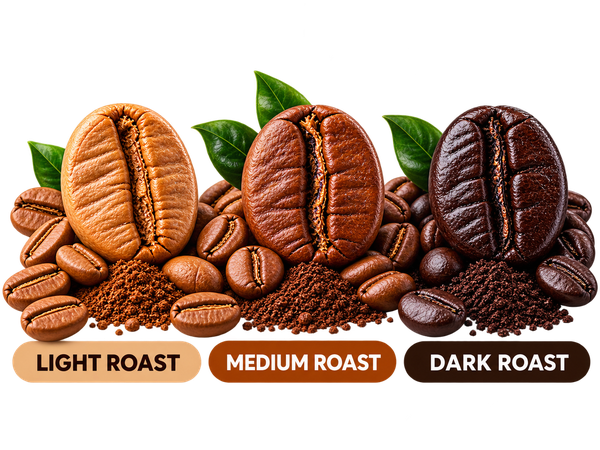
Coffee roast level has a major influence on the flavor, aroma, acidity, and body of your cup. From bright and fruity light roasts to rich and bold dark roasts, each level creates a different coffee experience.
What Are Coffee Roast Levels?
Coffee roast levels describe how far coffee beans are roasted after they are harvested and processed. The three main categories are light roast, medium roast, and dark roast.
As roasting continues, the beans become darker and develop different flavor characteristics.
| Roast Level | Typical Flavor | Acidity | Body |
|---|---|---|---|
| Light Roast | Fruity, floral, bright | Higher | Light |
| Medium Roast | Balanced, sweet, nutty | Medium | Medium |
| Dark Roast | Bold, smoky, bittersweet | Lower | Full |
Roast level is only one factor that determines the final taste. Bean origin, processing method, freshness, grind size, and brewing technique also play important roles.
What Is Light Roast Coffee?
Light roast coffee is roasted for a shorter time and usually retains more of the characteristics associated with the coffee’s origin.
Light roasts can have bright acidity and flavors such as fruit, flowers, citrus, or berries. They are often popular for pour-over and other brewing methods that highlight the bean’s individual characteristics.
Learn more in our guide to [What Is Light Roast Coffee?].
What Is Medium Roast Coffee?
Medium roast coffee sits between light and dark roasting. It offers a balance of acidity, sweetness, aroma, and body.
Depending on the beans, medium roasts can feature chocolate, caramel, nuts, fruit, or spice notes. This versatile roast works well with drip coffee makers, pour-over brewers, and many espresso-based drinks.
See our detailed guide to [What Is Medium Roast Coffee?].
What Is Dark Roast Coffee?
Dark roast coffee is roasted longer, producing darker beans and more pronounced roast flavors.
Dark roasts commonly have bold, bittersweet, smoky, or chocolate-like characteristics. They generally have less noticeable acidity and a fuller body than lighter roasts.
Read more about [What Is Dark Roast Coffee?].
Light vs. Medium vs. Dark Roast Coffee
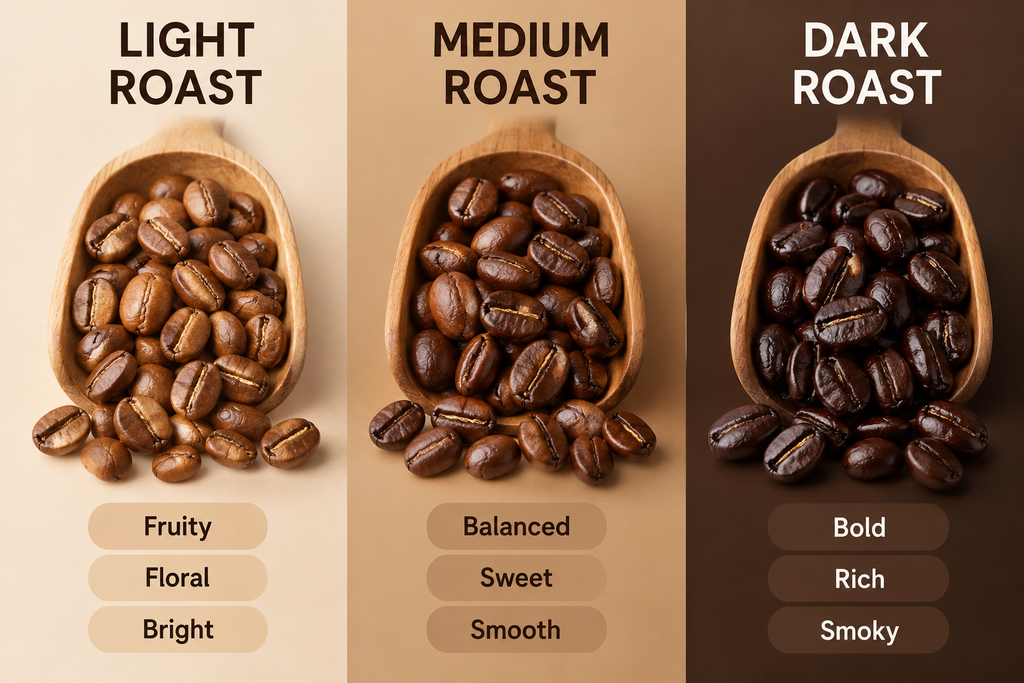
The easiest way to understand roast levels is to compare their typical characteristics. Light roasts are usually brighter and more acidic, medium roasts offer a balanced flavor, while dark roasts tend to have a bolder, richer taste and fuller body.
- Light roast: bright, complex, fruity, and higher in perceived acidity.
- Medium roast: balanced, sweet, and versatile.
- Dark roast: bold, rich, bittersweet, and more roast-forward.
There is no single roast level that is best for everyone. Your preferred flavor profile and brewing method should guide your choice.
For a detailed comparison, see [Light vs. Medium vs. Dark Roast Coffee].
How Coffee Roasting Affects Flavor
Roasting causes significant chemical changes inside the coffee bean. As the roast develops, the beans lose moisture and develop new aromas and flavors.
Light roasting tends to preserve more of the bean’s original character, while longer roasting produces stronger caramelized, toasted, and roast-related flavors.
The result can affect:
- Acidity
- Sweetness
- Bitterness
- Body
- Aroma
- Flavor complexity
Because coffee origins differ, two beans roasted to the same level can still taste very different.
Learn more about [How Coffee Roasting Affects Flavor].
Does Coffee Roast Affect Caffeine?
Roast level and caffeine can be confusing because the amount of caffeine depends partly on how coffee is measured.
A dark-roasted bean does not simply become caffeine-free as it gets darker. However, roasting changes the bean’s mass and density, which can affect caffeine comparisons when coffee is measured by weight or volume.
For a more detailed explanation, read [Does Coffee Roast Affect Caffeine?].
What Is the Best Roast for Espresso?
Espresso can be made with different roast levels. Medium and dark roasts are traditionally popular because their body and developed flavors can work well with espresso extraction.
However, light-roast espresso has also become increasingly common. It can produce a brighter and more fruit-forward shot.
Explore [Best Roast for Espresso] to compare your options.
What Is the Best Roast for Latte and Cappuccino?
Milk changes how coffee flavors are perceived. A roast with enough body and flavor intensity can remain noticeable after milk is added.
Medium and dark roasts are common choices for lattes and cappuccinos, while lighter roasts can create more distinctive and nuanced combinations.
See our guides to:
- [Best Roast for Latte]
- [Best Roast for Cappuccino]
What Is the Best Roast for Americano?
An Americano combines espresso with hot water, so the espresso roast remains an important part of the final flavor.
A medium roast can provide a balanced cup, while a darker roast can create a stronger, more traditional profile. Light-roast espresso can offer brighter acidity and more noticeable fruit or floral notes.
Read [Best Roast for Americano] for more details.
Light Roast vs. Espresso Roast
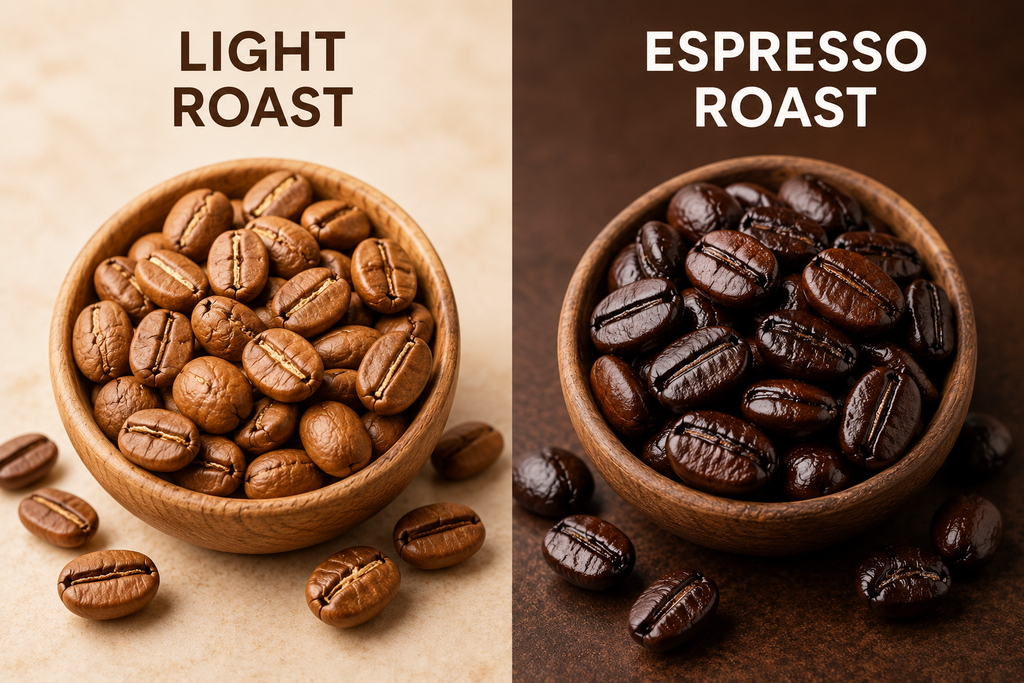
“Espresso roast” and “light roast” are not necessarily opposites. Espresso roast describes coffee intended or developed for espresso brewing, while light roast refers to the degree of roasting.
Light, medium, and dark describe roast development, while espresso roast usually refers to coffee selected or developed for espresso brewing.
A light-roasted coffee can be used for espresso if it is roasted and prepared appropriately.
See [Light Roast vs. Espresso Roast] for a closer comparison.
Coffee Roast Levels Explained
Light, medium, and dark roasts offer different flavor profiles, but roast level alone does not determine coffee quality. The bean’s origin, processing, freshness, grind, and brewing method all contribute to the final cup.
Whether you prefer a bright light roast, balanced medium roast, or bold dark roast, understanding roast levels makes it easier to choose coffee that matches your taste.
Explore our complete Coffee Roast guides to compare roast levels, brewing methods, flavor profiles, and caffeine.